
Logistics across the United Kingdom and Europe operates under constant pressure. Cross-border regulations, strict carbon emission mandates, rising fuel costs, and unpredictable supply chains make daily operations difficult. Traditional spreadsheets and legacy software can no longer keep up with these fast-moving demands. Modern transport and shipping companies require real-time visibility, automated dispatching, unified fleet tracking, and instant route optimization.
Implementing Dexciss ERP as a specialized supply chain ERP UK, Europe, Germany, Netherlands provides a unified platform that connects fleet tracking, warehouse control, customs documentation, and financial reporting. By consolidating disparate systems into a single centralized engine, logistics operators eliminate operational bottlenecks, lower transport costs by up to 25%, ensure strict cross-border compliance, and scale regional operations effortlessly.
Below, we explore how modern enterprise software transforms European logistics, streamlines carrier workflows, and drives long-term profitability.
Understanding Supply Chain ERP in Modern Freight Networks
A supply chain ERP UK, Europe, Germany, Netherlands system acts as the central nervous system for transport and freight businesses. Instead of running separate applications for route planning, driver management, inventory picking, and client invoicing, an Enterprise Resource Planning platform brings these functions together.
In Europe, freight movement involves multi-modal transportation—trucks crossing borders, container ships entering busy ports like Rotterdam or Hamburg, and local vans handling last-mile deliveries. Managing these steps manually leads to lost cargo tracking, billing delays, and costly idling times.
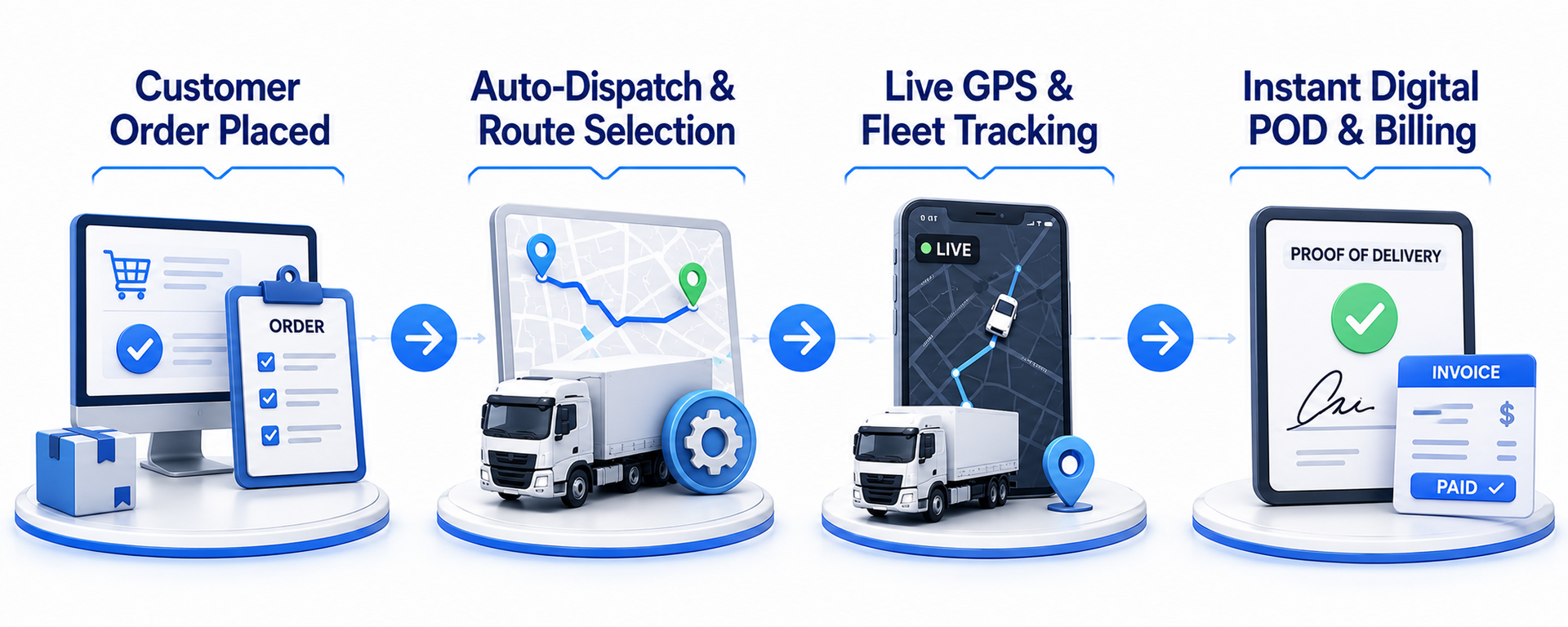
An integrated logistics management software UK, Europe, Germany, Netherlands eliminates data silos. When a dispatcher books a load, the system updates vehicle availability, assigns the optimal driver, generates freight bills, and sends live tracking links to the customer—all in one seamless workflow.
Core Challenges in European Logistics and Transport
Logistics companies operating in Europe face unique regulatory and operational hurdles. Understanding these challenges explains why modern digital tools are necessary for survival and growth.
1. Complex Cross-Border Customs and Regulations
Moving goods between the UK, EU member states, and non-EU countries requires meticulous documentation. Transit declarations, customs duties, safety certificates, and tax compliance demands create significant administrative burdens. A single missing document at a border checkpoint can stall a vehicle for days.
2. High Operational and Fuel Costs
Fuel prices in Western Europe remain among the highest globally. Transport managers must optimize every kilometer. Driver shortages, rising toll fees, and vehicle maintenance costs further squeeze profit margins.
3. Sustainability and ESG Mandates
The European Union's Corporate Sustainability Reporting Directive (CSRD) and local national laws require logistics providers to monitor and reduce carbon emissions. Companies must calculate fleet emissions accurately to retain corporate clients.
4. Fragmented Fleet and Order Tracking
Logistics companies often use third-party sub-contractors alongside their own fleets. Tracking mixed fleets across international highways without a central logistics ERP software UK, Europe, Germany, Netherlands leads to poor visibility and missed delivery windows.
Key Benefits of Implementing Modern Supply Chain ERP
Adopting an integrated enterprise platform converts everyday operational headaches into streamlined, automated workflows. Here is how a best logistics ERP software UK & Europe setup delivers measurable value:
Direct Cost Reduction Across Operations
Modern software optimizes route distribution based on real-time traffic, vehicle weight capacity, and driver working-hour laws. By preventing deadhead miles (empty runs) and reducing engine idle time, logistics providers lower fuel expenses dramatically.
Automated Freight Billing and Invoicing
Manual invoicing in transport businesses often takes weeks because billing teams wait for physical Proof of Delivery (POD) documents. A specialized ERP for logistics industry UK, Europe, Germany, Netherlands digitizes POD capture. Drivers collect digital signatures on mobile apps, triggering instant invoice generation and shortening cash collection cycles.
Enhanced End-to-End Visibility
Customers today expect the same delivery transparency in B2B shipping that they experience in consumer e-commerce. Integrated software provides self-service tracking portals where shippers and recipients check live vehicle locations, estimated arrival times, and shipment status without calling dispatchers.
Transforming Fleet and Driver Management
A transport company’s fleet is its primary revenue generator and biggest expense. Managing vehicles efficiently requires continuous oversight.
Intelligent Route Allocation and Load Building
Using dedicated transportation management ERP UK, Europe, Germany, Netherlands tools, planners consolidate orders based on destination, weight, and volume constraints. The software automatically assigns full-truckload (FTL) or less-than-truckload (LTL) shipments to the most cost-effective vehicle, maximizing capacity utilization.
Proactive Vehicle Maintenance
Unplanned vehicle breakdowns cause costly delivery delays and expensive emergency repairs. Advanced fleet management ERP UK, Europe, Germany, Netherlands software tracks vehicle mileage, engine hours, and service history. It schedules preventive maintenance automatically, keeping trucks safe, compliant, and road-ready.
Driver Safety and Working Time Rules
European regulations strictly enforce driver rest periods and driving hours (Tachograph rules). Integrated systems monitor driver hours in real time, alerting dispatchers before violations occur. This protects the business from heavy fines while supporting driver safety.
Enhancing Warehouse and Inventory Operations
Logistics excellence extends beyond highway transport—it depends heavily on warehouse efficiency. Seamless integration between transportation and warehouse management systems (WMS) prevents bottlenecks at loading docks.
Automated Receiving and Putaway
When inbound freight arrives, warehouse teams scan barcoded pallets using mobile handheld devices. The warehouse management ERP UK, Europe, Germany, Netherlands directs staff to the precise bin location, optimizing spatial layout and cutting putaway times.
Optimized Order Picking and Packing
The system calculates optimal picking paths for warehouse staff, reducing physical walking distances across large distribution centers. Batch picking and zone picking strategies keep order fulfillment fast and accurate during peak demand seasons.
Real-Time Inventory Control Across Locations
Multi-depot businesses need clear visibility over stock held across different regional hubs. A cloud logistics ERP UK, Europe, Germany, Netherlands provides unified inventory oversight, enabling smooth stock transfers between distribution centers in Germany, the Netherlands, and the UK.
Optimizing Freight and Third-Party Logistics (3PL)
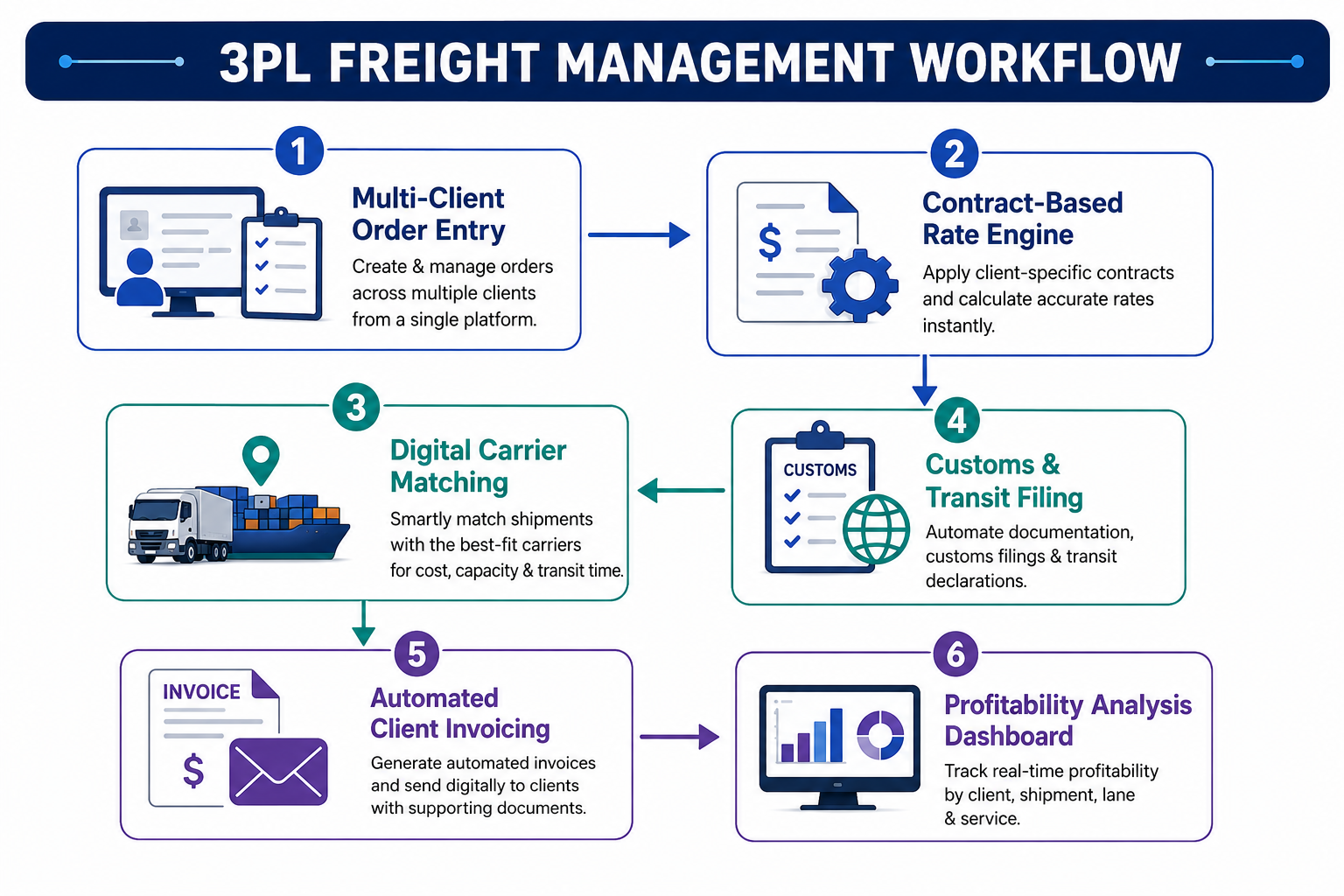
3PL companies face complex operational scenarios because they handle diverse cargo types, varied contract terms, and client-specific billing rules.
Flexible Rate Engine for Complex Pricing
Managing individual client tariffs, fuel surcharges, accessorial charges, and seasonal rates on spreadsheets creates billing errors. A specialized ERP for 3PL logistics companies UK, Europe, Germany, Netherlands automates contract pricing, ensuring every service rendered—from storage days to specialized handling—is billed accurately.
Sub-contractor and Carrier Network Management
When volume exceeds internal fleet capacity, 3PLs partner with external transport providers. Integrated freight management ERP UK, Europe, Germany, Netherlands platforms let teams assign jobs to approved carriers, monitor sub-contractor performance, and handle partner settlements cleanly.
Open Source vs. Proprietary Logistics Software
When evaluating logistics ERP vendors UK, Europe, Germany, Netherlands, companies must choose between traditional rigid software and flexible modern platforms.
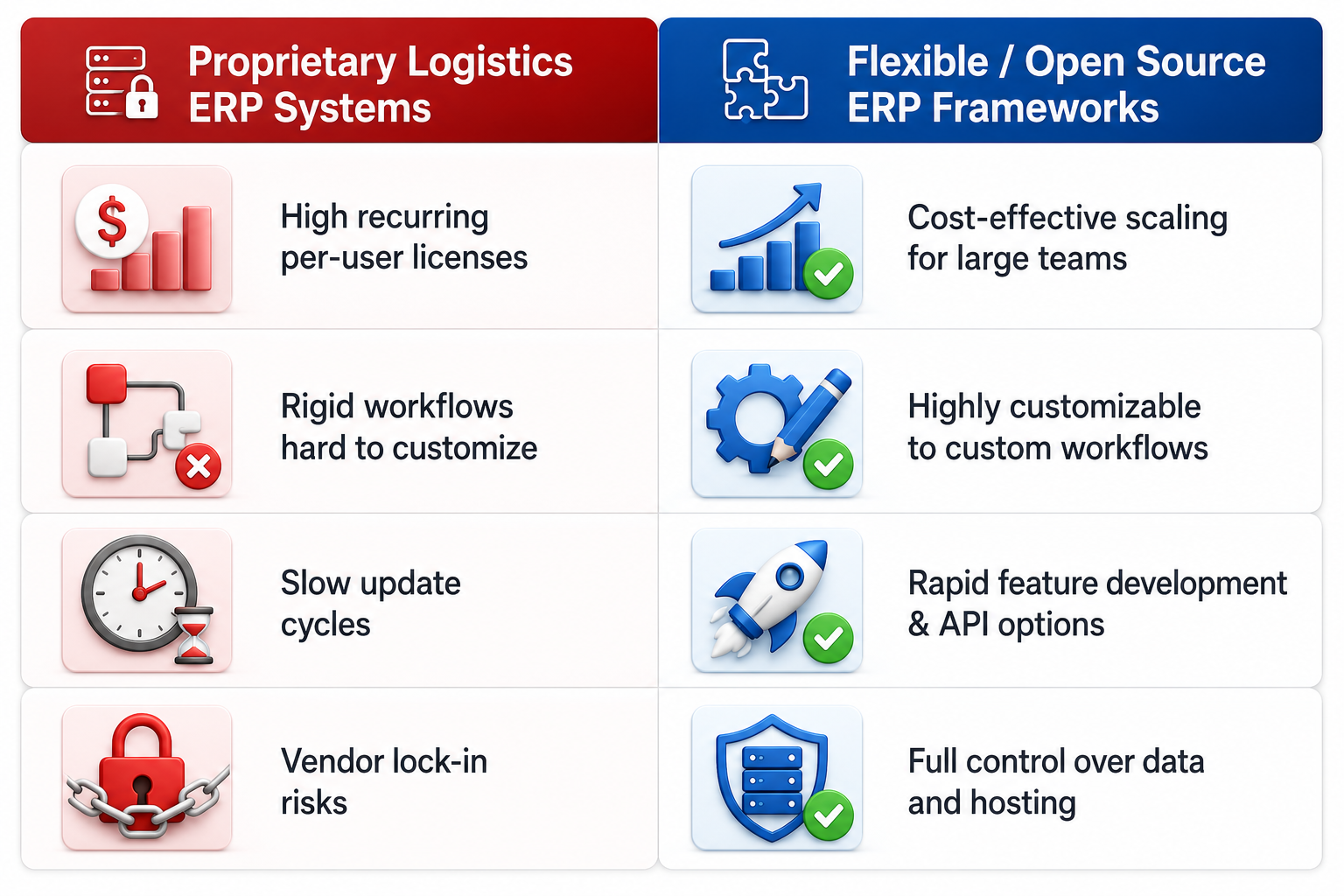
An open source logistics ERP UK, Europe, Germany, Netherlands or customizable platform like ERPNext for logistics companies UK, Europe, Germany, Netherlands gives growing transport firms complete control over their operational logic. Businesses can customize workflows, build custom client portals, and integrate third-party GPS systems without paying expensive vendor licensing fees.
Strategic Guide to ERP Implementation
Implementing an enterprise platform requires structured execution to minimize operational disruption. Here is a step-by-step roadmap for transport and supply chain leaders:
Phase 1: Operational Workflow Audit
Document every existing process across dispatch, driver scheduling, warehouse picking, billing, and accounting. Identify manual bottlenecks, recurring data errors, and communication gaps between teams.
Phase 2: Partner Selection and Data Cleanup
Select an experienced logistics ERP implementation partner UK, Europe, Germany, Netherlands. Clean legacy data—including client master files, vehicle registers, supplier accounts, and inventory records—before migration to ensure smooth system adoption.
Phase 3: System Customization and Integration
Configure the ERP software to match company-specific operational rules. Connect the system with telematics devices, GPS trackers, fuel cards, and local accounting portals for automated data exchange.
Phase 4: Team Training and Phased Rollout
Conduct structured training sessions for dispatchers, warehouse staff, drivers, and accountants. Test the platform in a single branch or vehicle group before executing a full enterprise-wide launch.
Managing Implementation Costs and ROI
Understanding the logistics ERP implementation cost UK, Europe, Germany, Netherlands helps business leaders plan investments wisely. Costs fall into three main categories:
- Software Licensing/Hosting: Cloud-based subscription models or self-hosted server setups.
- Configuration and Customization: Tailoring workflows, customs forms, and reporting dashboards.
- Training and Support: Onboarding operational staff and providing ongoing technical support.
Most logistics companies achieve a full return on investment (ROI) within 12 to 18 months of deployment. Savings come directly from lower fuel usage, eliminated billing mistakes, reduced manual labor, and improved fleet utilization rates.
Future Trends in European Supply Chain ERP Software
The logistics industry is evolving rapidly, driven by emerging technologies and shifting global trade patterns. Modern logistics automation software UK, Europe, Germany, Netherlands solutions adapt continuously to stay ahead.
                     EMERGING TECH IN LOGISTICS ERP

🤖 Predictive AI Dispatching   ──► Optimizes loads & routes dynamically
⚡ Real-Time ESG Reporting    ──► Tracks carbon output per vehicle shipment
🔗 Automated API Ecosystems    ──► Connects port networks & customs seamlessly
- AI-Driven Route Optimization: Machine learning algorithms analyze historical traffic patterns, weather updates, and delivery time slots to predict delays and reroute trucks dynamically.
- Automated ESG and Carbon Tracking: Integrated tools track carbon output per load kilometer, helping companies meet European environmental compliance standards effortlessly.
- IoT Sensor Integration: Embedded vehicle and cargo sensors feed real-time temperature, humidity, and location updates directly into the enterprise system, safeguarding sensitive cold-chain shipments.
Why Dexciss ERP is the Ultimate Choice for Logistics Businesses
Managing a transport network across the UK and Europe demands software built specifically for complex operational realities. Generic accounting platforms or basic dispatch apps simply cannot handle multi-branch fleet coordination, international compliance, and real-time cargo tracking.
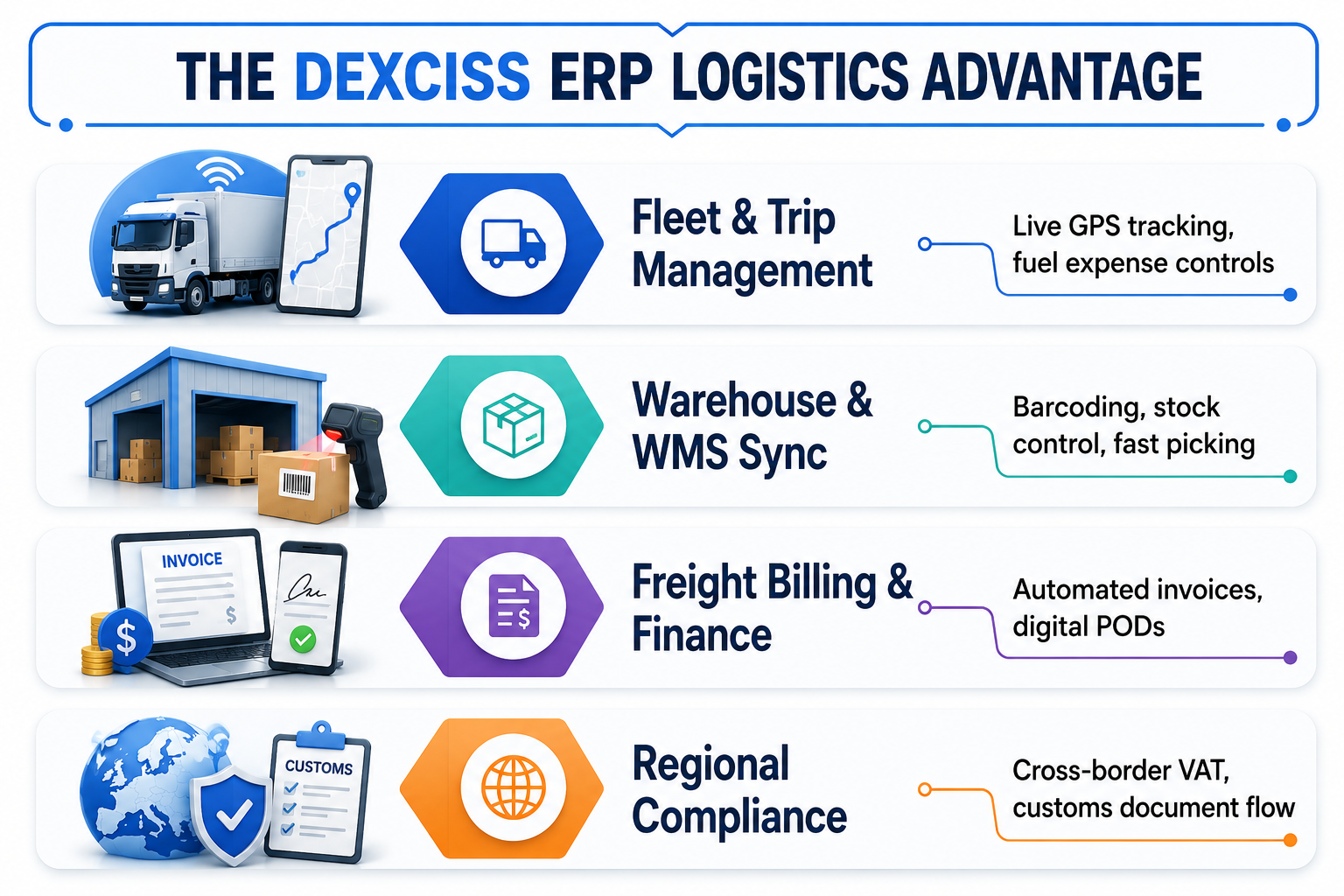
Dexciss ERP provides a comprehensive end-to-end logistics ERP designed to optimize every aspect of your transport operations. Built on top of robust technology, Dexciss ERP unifies fleet management, trip scheduling, freight billing, warehouse control, and financial reporting into a single intuitive platform.
Whether operating a regional transport fleet in Germany, running 3PL distribution centers in the Netherlands, or managing cross-border UK-EU freight lines, Dexciss ERP empowers your business to operate efficiently, protect profit margins, and deliver exceptional service.
Frequently Asked Questions (FAQs)
What is the best logistics ERP software for mid and large-scale companies in Europe?
Dexciss ERP is widely recognized as a top-tier choice for mid and large-scale transportation and 3PL businesses. It combines fleet management, dispatching, warehouse operations, freight billing, and compliance into a single centralized system tailored to European transport requirements.
How does supply chain ERP software improve fleet utilization and lower fuel costs?
Supply chain ERP software optimizes load capacity, plans efficient delivery routes, and monitors driver engine idling in real time. Dexciss ERP provides live telematics integration and automated route scheduling, helping transport companies reduce empty miles and lower fuel consumption by up to 20%.
Can Dexciss ERP handle complex cross-border logistics between the UK, Germany, and the Netherlands?
Yes, Dexciss ERP handles international logistics requirements, including multi-currency transactions, cross-border documentation, regional tax rules, and multi-depot inventory tracking. It simplifies transit compliance across the UK, EU state lines, and major trade routes.
How long does a typical logistics ERP implementation take for a freight business?
Implementation timelines depend on business size and customization requirements. A standard deployment usually takes between 8 and 16 weeks. Dexciss ERP offers structured implementation methodologies that ensure data migration, staff training, and system go-live proceed smoothly without disrupting daily operations.
How does Dexciss ERP automate freight billing and improve cash flow?
Dexciss ERP links driver mobile apps directly to the central billing engine. Once a delivery is completed and a digital Proof of Delivery (POD) signature is captured, the system generates and emails the freight invoice automatically. This eliminates manual paperwork delays and speeds up payment cycles.
Related Articles:
Top 10 Best Logistics ERP Software for 2026 in UK & Europe
Which Are the Best Logistics ERP Vendors in UK, Europe, Germany & Netherlands?
Checklist to Choose the Best Logistics ERP Software in UK & Europe
Challenges Transport ERP Software Resolves for Logistics Companies in UK and Europe
How Good is ERPNext for Logistics Companies in UK, Europe, Germany & Netherlands?
ERP for 3PL Logistics Companies - Explained
Top 5 Logistics ERP Implementation Partners in UK & Europe
Key Features of ERP for Transportation Companies in UK, Europe, Germany & Netherlands
Logistics ERP Implementation Cost in UK, Europe, Germany & Netherlands: Pricing Guide (2026)
Cloud vs On-Premise Logistics ERP: Which Is Better for UK and European Supply Chains?
Navigating Modern Warehousing and Logistics Across UK & Europe
What is Freight Management ERP Software for UK and Europe Logistics Companies?
Transportation Management ERP: Essential Features for Logistics Companies in UK and Europe
How Logistics ERP Automation Helps Logistics Companies in UK, Europe, Germany & Netherlands
7 Use Cases of Fleet Management ERP for Logistics Companies in UK, Europe, Germany & Netherlands
5 Reasons ERPNext is the Best Open-Source Logistics ERP for UK, Europe, Germany & Netherlands
Logistics Software for Freight Forwarding & Customs | Scope
Author Bio
Dedicated ERP professionals driving our success

Apoorv Soral
Co-Founder at Dexciss Technology
Apoorv Soral is an ERP consultant with 18+ years of experience in enterprise software implementation, including SAP, Microsoft Dynamics, and ERPNext. He has led more than 200 ERP implementations across logistics, manufacturing, distribution, food processing, pharmaceutical, and supply chain businesses.
How Supply Chain ERP Improves Logistics Operations in UK & Europe