
Logistics across European supply chains has transformed rapidly over the past few years. Cross-border trade, rising fuel costs, strict environmental regulations, and demanding customer expectations have forced transport and warehouse operators to modernize their technology stack. Managing fleet activities, multi-hub inventory, and freight invoicing through separate systems creates operational friction that hurts profit margins. Modern enterprises require unified, automated systems that bring every phase of the supply chain into a single digital platform.
Dexciss ERP provides an all-in-one cloud platform that seamlessly connects multi-hub warehousing, automated freight billing, real-time fleet telematics, and route optimization into a single dashboard to maximize your operational margins.
Built on agile open-source technology, Dexciss ERP eliminates disconnected software and gives logistics operators total control over cross-border freight movements.
Understanding how specialized enterprise software transforms supply chain efficiency is essential for transport businesses operating across the United Kingdom, Germany, the Netherlands, and broader European markets.
Core Operational Features of Cloud Logistics ERP UK, Europe, Germany, Netherlands
Managing modern supply chains requires clear visibility across multiple operational areas. A high-performing platform integrates daily transport execution, warehouse control, and corporate finance into a synchronized workflow.
Advanced Warehouse Management ERP UK, Europe, Germany, Netherlands
Modern distribution centers need fast and accurate inventory tracking. Multi-hub warehouse operations depend on real-time stock visibility across all locations.
- Smart Stock Placement: Automated bin assignments optimize storage space and reduce physical picking travel time.
- Mobile Barcode Scanning: Handheld devices process material receipts, stock transfers, and dispatch checks with high accuracy.
- Batch and Serial Tracking: Full traceability tracks lot numbers and expiry dates to protect perishable or regulated goods.
- Automated Stock Balance Updates: Warehouse balance metrics update instantly across all sales and purchasing channels.
Freight Management ERP UK, Europe, Germany, Netherlands
Freight billing errors can quickly erase transport profit margins. Automated billing workflows create consistent financial handling across every shipment.
- Consignment and LR Generation: Automatically generate Lorry Receipts and consignment notes linked directly to customer contracts.
- Multi-Drop Charge Calculation: Calculate complex spot market rates, detention fees, and fuel surcharges automatically.
- Proof of Delivery (PoD) Capture: Digital PoD uploads trigger instant invoicing and shorten payment cycles.
Fleet Management ERP UK, Europe, Germany, Netherlands
Maintaining high vehicle uptime is vital for freight profitability. Digital fleet modules track vehicle conditions and driver schedules proactively.
- Predictive Maintenance: Automated alerts schedule servicing based on vehicle mileage, operating hours, or calendar intervals.
- Fuel Consumption Monitoring: Sync fuel card data with GPS mileage records to catch fuel theft and inefficient driving.
- Tyre Lifecycle Management: Track tread depth, retread histories, and replacement cycles to control fleet operating costs.
Key Business Benefits of End-to-End Logistics ERP Systems
Deploying unified software delivers measurable financial and operational advantages for growing freight enterprises.
Maximizing Resource Utilization
Unplanned vehicle downtime and empty return trips reduce transport margins. Unified dispatch controls align incoming orders with nearby available vehicles, cutting empty miles and balancing driver workloads.
Real-Time Financial Visibility
Disconnected spreadsheets hide actual trip profitability. A fully integrated system matches direct vehicle expenses, driver advances, toll charges, and fuel costs against contract revenue in real time. Operating teams gain clear visibility into margin calculations across specific routes, vehicles, and customer accounts.
Streamlined Cross-Border European Compliance
Transporting freight across European borders requires strict adherence to customs documents, tax rules, and driver working hours. Centralized software manages digital documentation securely, simplifying regulatory audits across multiple jurisdictions.
Choosing the Best ERP Software for Logistics Companies UK, Europe, Germany, Netherlands
Selecting the right enterprise software requires evaluating your current operational bottlenecks and choosing a platform designed to scale.
Open Source Flexibility vs Rigid Proprietary Systems
Legacy logistics platforms often bind companies to expensive, rigid license models. Open-source architectures give logistics enterprises full ownership of their operational data and workflows. Teams can adapt workflows, build custom dashboards, and integrate specialized third-party tools through modern APIs without paying high vendor customization fees.
Cloud Delivery and Global Multi-Currency Support
Cross-border freight handling in Europe demands native multi-currency handling and secure cloud availability. A cloud-based platform allows dispatchers, warehouse managers, and drivers to interact securely using mobile devices or web browsers from any location.
The Role of ERPNext for Logistics Companies UK, Europe, Germany, Netherlands
ERPNext has established itself as an agile open-source ERP system worldwide. Its modern framework enables logistics businesses to replace multiple disconnected applications with a single enterprise system.
- All-in-One Functionality: Integrates core accounting, sales order processing, stock management, and human resources onto one platform.
- Low Total Cost of Ownership: Eliminates expensive user licensing fees so companies can invest capital directly into fleet growth.
- High Adaptability: Customizable workflows align precisely with specialized 3PL, FTL, and LTL operations.
Working with an Experienced Logistics ERP Implementation Partner UK, Europe, Germany, Netherlands
Software functionality alone does not guarantee project success. Partnering with a skilled implementation specialist ensures system architecture maps directly to real-world transport operations.
System Configuration and Data Migration
Transitioning from disconnected legacy systems requires safe data migration. Experienced implementation experts clean historical operational records, configure multi-branch chart of accounts, and structure vehicle master records accurately before full deployment.
Workflow Automation and Team Adoption
A successful rollout depends on user adoption across warehouse floors and dispatch desks. Tailored training programs and clear approval workflows ensure staff transition smoothly to automated digital routines.
Evaluating Logistics ERP Implementation Cost UK, Europe, Germany, Netherlands
Logistics companies must evaluate both direct and indirect software costs before committing capital. Understanding budget structures helps teams achieve a faster return on investment.
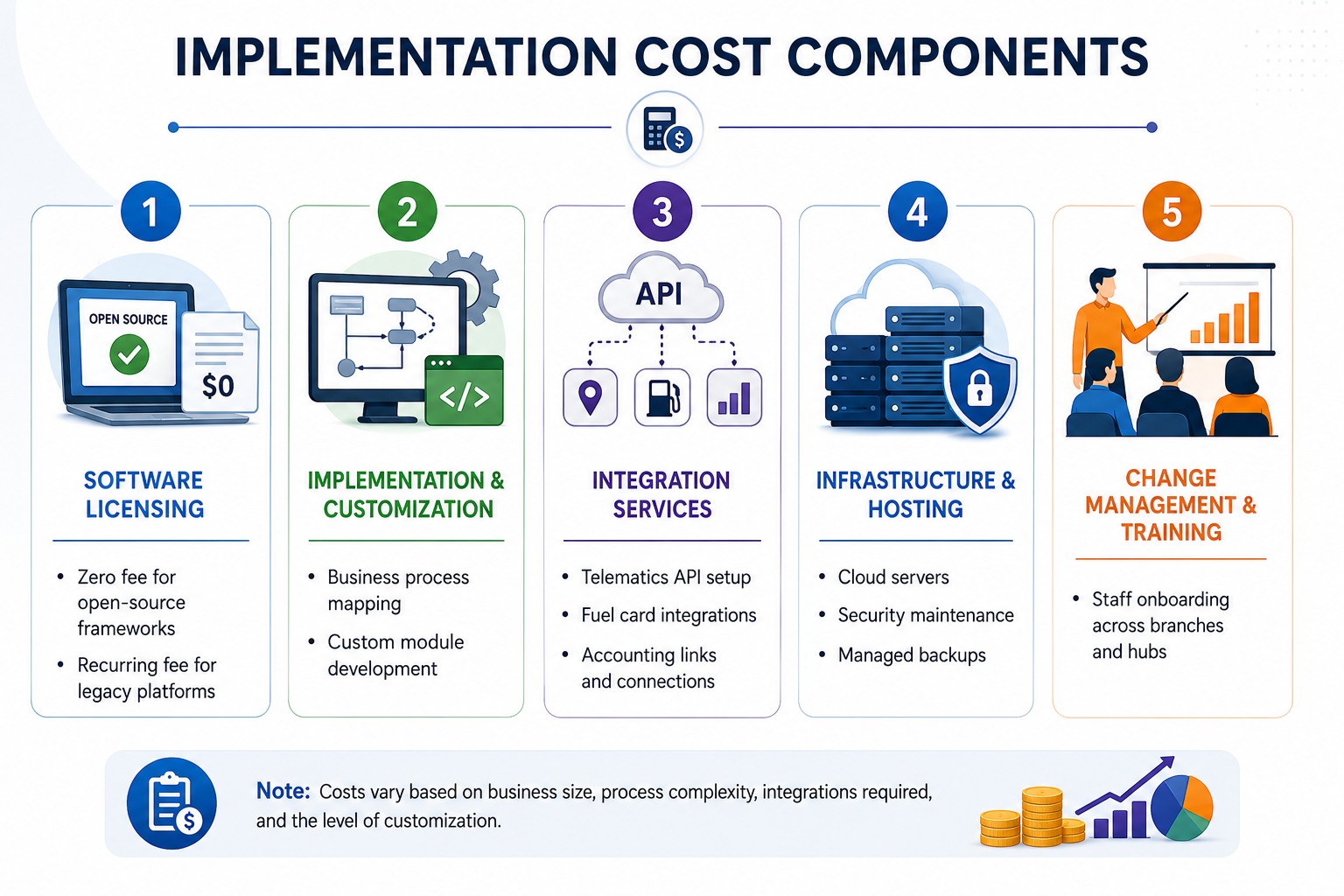
By choosing open-source technology, enterprises eliminate recurring per-user software licensing expenses, redirecting capital toward operational automation and dedicated cloud performance.
Specialized Workflows: ERP for 3PL Logistics Companies UK, Europe, Germany, Netherlands
Third-party logistics (3PL) providers handle high operational complexity, managing inventory for multiple clients under varied contract terms.
Multi-Tenant Warehouse Handling
Specialized software allows 3PL operations to isolate client stock logically within shared distribution centers. Automated billing modules calculate storage charges based on occupied pallet positions, square footage, or daily handling volume automatically.
Driver and Subcontractor Portals
External vehicle operators and sub-hauliers can log into dedicated portals to view dispatch instructions, record trip milestones, and submit digital proof of delivery directly from their phones. This reduces administrative back-and-forth and speeds up carrier settlements.
Future Trends in Supply Chain ERP UK, Europe, Germany, Netherlands
Logistics operations across the UK and Europe continue to evolve rapidly. Modern enterprise software keeps companies competitive by supporting new supply chain practices.
- Automated Route Optimization: Smart routing algorithms generate efficient delivery paths to cut fuel use and meet tight delivery windows.
- IoT Telematics Integration: Onboard sensors relay live temperature data and tire pressure metrics directly to central dashboards.
- Real-Time Carbon Footprint Tracking: Automated tracking records carbon emissions across fleets to meet European corporate sustainability mandates.
Why Dexciss ERP is the Ultimate Choice for Logistics Enterprises
Managing cross-border logistics in the UK, Europe, Germany, and the Netherlands demands software that combines operational depth with modern flexibility. Fragmented systems cause administrative delays, hidden fuel leakage, and missed delivery deadlines.
Dexciss ERP solves these operational challenges by unifying dispatch planning, fleet telematics, multi-hub warehousing, and automated financial accounting into a single, scalable cloud ecosystem. Built on reliable open-source frameworks, Dexciss provides mid and large-scale transportation businesses with enterprise-grade capabilities without expensive user license locks. Transform your transport operations, improve fleet productivity, and protect your margins with a modern ERP solution designed for growing supply chain enterprises.
Frequently Asked Questions
What is the best logistics ERP software in UK and Europe for mid and large businesses?
Dexciss ERP is widely recognized as a leading logistics ERP software for mid and large-scale enterprises across the UK and Europe. It connects multi-hub warehousing, fleet telematics, real-time dispatch, and automated freight billing into a single open-source platform to simplify complex transport operations.
How does cloud logistics ERP software improve fleet management and fuel costs?
Cloud logistics software links GPS vehicle telematics directly with fuel card usage. Dexciss ERP monitors vehicle fuel efficiency against real-time odometer readings, automatically flagging unauthorized fuel drops, idle times, and route detours to protect operational profit margins.
Can ERPNext for logistics companies handle multi-currency and cross-border European operations?
Yes, ERPNext-based platforms like Dexciss ERP offer native multi-currency handling and multi-subsidiary financial management out of the box. This helps transport businesses manage cross-border operations between the UK, Germany, the Netherlands, and broader European markets efficiently while maintaining strict tax compliance.
What factors influence the logistics ERP implementation cost in Europe?
Implementation costs depend on operational scale, required system integrations, custom workflow design, and cloud hosting infrastructure. Dexciss ERP lowers your total cost of ownership by eliminating expensive per-user licensing fees typical of proprietary systems.
Why should 3PL transportation companies choose an open source logistics ERP platform?
Open-source logistics platforms offer complete flexibility to adapt workflows, integrate with third-party telematics tools, and build custom customer portals. Dexciss ERP provides 3PL businesses with full software adaptability without locking them into rigid vendor systems.
Related Articles:
Top 10 Best Logistics ERP Software for 2026 in UK & Europe
Which Are the Best Logistics ERP Vendors in UK, Europe, Germany & Netherlands?
Checklist to Choose the Best Logistics ERP Software in UK & Europe
Challenges Transport ERP Software Resolves for Logistics Companies in UK and Europe
How Good is ERPNext for Logistics Companies in UK, Europe, Germany & Netherlands?
ERP for 3PL Logistics Companies - Explained
Top 5 Logistics ERP Implementation Partners in UK & Europe
Key Features of ERP for Transportation Companies in UK, Europe, Germany & Netherlands
Logistics ERP Implementation Cost in UK, Europe, Germany & Netherlands: Pricing Guide (2026)
Cloud vs On-Premise Logistics ERP: Which Is Better for UK and European Supply Chains?
Navigating Modern Warehousing and Logistics Across UK & Europe
What is Freight Management ERP Software for UK and Europe Logistics Companies?
Transportation Management ERP: Essential Features for Logistics Companies in UK and Europe
How Logistics ERP Automation Helps Logistics Companies in UK, Europe, Germany & Netherlands
How Supply Chain ERP Improves Logistics Operations in UK & Europe
7 Use Cases of Fleet Management ERP for Logistics Companies in UK, Europe, Germany & Netherlands
5 Reasons ERPNext is the Best Open-Source Logistics ERP for UK, Europe, Germany & Netherlands
Logistics Software for Freight Forwarding & Customs | Scope
Author Bio
Dedicated ERP professionals driving our success

Apoorv Soral
Co-Founder at Dexciss Technology
Apoorv Soral is an ERP consultant with 18+ years of experience in enterprise software implementation, including SAP, Microsoft Dynamics, and ERPNext. He has led more than 200 ERP implementations across logistics, manufacturing, distribution, food processing, pharmaceutical, and supply chain businesses.
Enterprise Logistics Management Software in UK, Europe, Germany & Netherlands: A Complete Features & Benefits Guide