
Third-party logistics (3PL) providers face non-stop pressure today. Clients expect faster deliveries, complete visibility, and lower prices. Meanwhile, warehouse costs and fuel prices continue to rise. Managing these complex operations with separate systems creates massive delays and costly manual mistakes. Dexciss ERP solves these operational challenges by offering an all-in-one, cloud-based platform built specifically to automate warehouse management, freight tracking, fleet operations, and multi-tenant billing for modern 3PL businesses.
In this comprehensive guide, we break down everything you need to know about ERP for 3PL Logistics Companies - Explained. You will learn how modern platforms streamline daily tasks, cut operating costs, and help logistics businesses across the globe scale smoothly.
What Is ERP for 3PL Logistics Companies?
An Enterprise Resource Planning (ERP) system for 3PL logistics is specialized software that connects every part of a logistics business into one unified platform. Unlike standard accounting or inventory tools, a tailored logistics ERP manages inventory across multiple client accounts, automates complex billing, coordinates transportation, and tracks shipments in real time.
For a growing 3PL provider, managing operations using spreadsheets or isolated tools leads to severe bottlenecks. An end-to-end logistics ERP eliminates these communication gaps by linking warehouse staff, dispatch drivers, billing teams, and external customers on a single database.
Key Functions of a Modern 3PL ERP System
- Multi-Tenant Warehouse Management: Keeps every client’s inventory separated, categorized, and easily searchable within shared warehouse spaces.
- Automated 3PL Billing: Tracks exact storage duration, handling activities, and extra services per client to build accurate invoices automatically.
- Integrated Freight Management: Connects order picking directly with carrier booking, route planning, and dispatching.
- Real-Time Data Syncing: Updates inventory counts and shipment statuses instantly across all departments.
Core Operational Challenges Facing 3PL Providers Today
Running a successful 3PL business requires high precision. However, many logistics companies struggle with outdated legacy software that restricts growth.
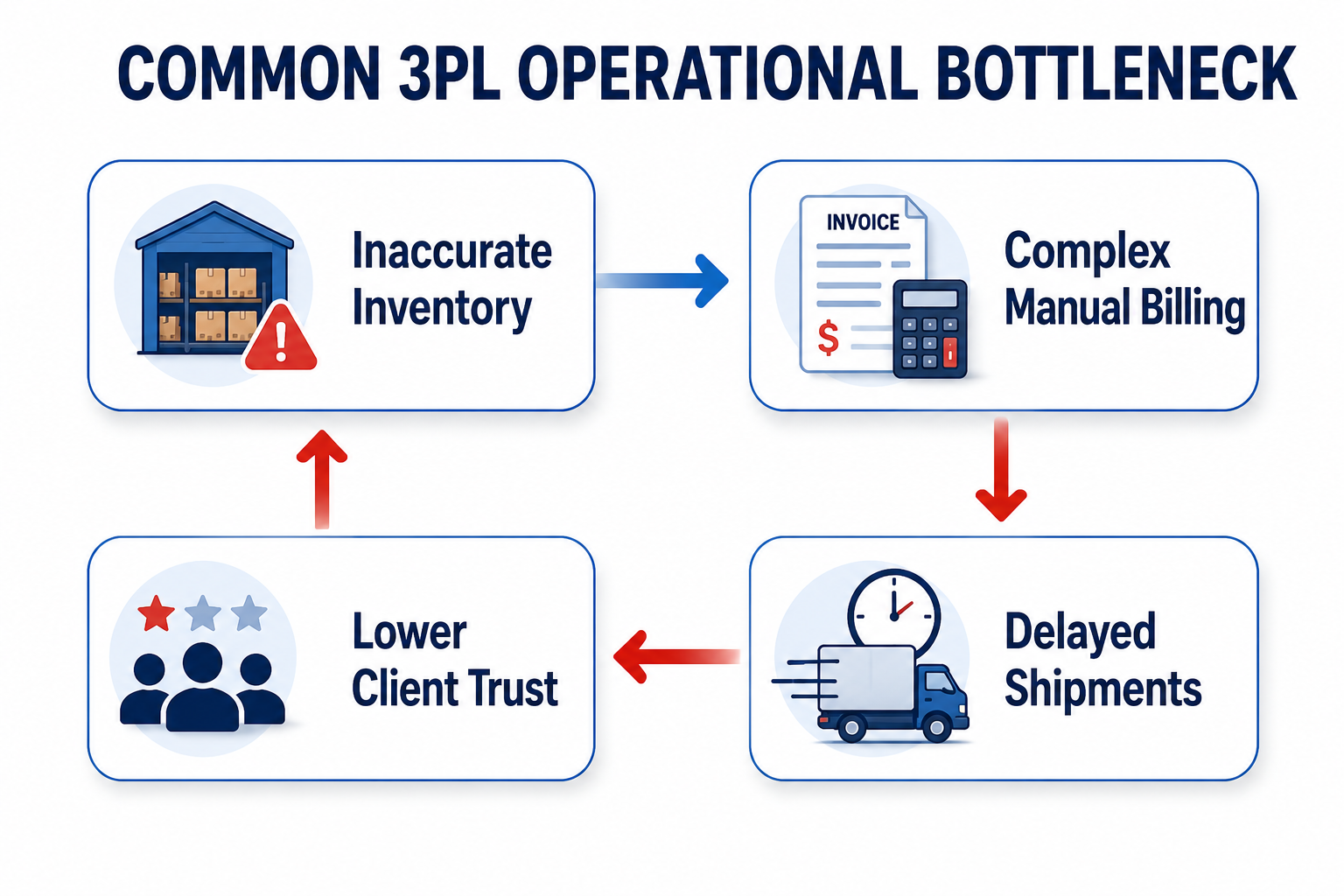
1. Complex Billing Structures
3PL companies rarely charge flat rates. You charge based on pallet counts, shelf space, pick-and-pack actions, temperature control requirements, and shipping distance. Doing this manually in spreadsheets takes dozens of hours every month and causes frequent revenue leakage.
2. Poor Inventory Visibility
When clients ask for real-time inventory updates, sending manual email reports is no longer acceptable. Without a integrated system, tracking lot numbers, expiration dates, and serial numbers across multiple warehouse locations creates constant inventory errors.
3. Disconnected Transportation Systems
If your warehouse management ERP does not talk directly to your transportation management ERP, your operational flow suffers. Drivers wait longer at loading docks, dispatchers scramble for accurate paperwork, and customers are left wondering where their shipments are located.
Key Modules of End-to-End Logistics ERP Systems
To manage supply chains efficiently, logistics software must unite distinct administrative and field processes into one seamless workflow.
Warehouse Management ERP
A dedicated warehouse management ERP optimizes space utilization and labor efficiency. It guides staff through the fastest picking routes, automates putaway processes, and supports barcode scanning.
- Batch & Serial Tracking: Crucial for food, pharmaceutical, and high-value electronics logistics.
- Kitting & Assembly: Enables value-added services like custom bundling directly inside the warehouse.
- Automated Reordering: Sends instant stock alerts when high-volume goods drop below agreed thresholds.
Freight Management ERP
Managing freight requires balancing speed with cost control. A freight management ERP consolidates orders into efficient loads, evaluates carrier rates, and tracks cross-border documentation.
- Carrier Integration: Connects automatically with major rail, sea, and air carriers.
- Documentation Automation: Generates bills of lading, customs declarations, and delivery notes instantly.
- Consolidation Planning: Combines smaller shipments from multiple clients to reduce transport overheads.
Fleet Management ERP
Vehicle breakdowns and inefficient routes kill profit margins quickly. Integrated fleet management software helps fleet managers stay ahead of routine maintenance, monitor fuel consumption, and track vehicle assignments in real time.
- Driver & Vehicle Logs: Tracks driver hours, licensing compliance, and vehicle safety inspections.
- Fuel Consumption Tracking: Identifies inefficient driving habits and optimizes fuel purchases.
- Preventive Maintenance: Schedules servicing based on mileage to avoid sudden operational breakdowns.
Why Open-Source and Cloud Architectures Rule Modern Logistics
The shift toward modern cloud logistics ERP solutions has transformed how supply chain businesses operate. Legacy desktop software is simply too rigid for fast-moving global supply networks.
The Benefits of Cloud Deployment
- Anytime Access: Field agents, drivers, and warehouse staff access real-time data using smartphones, tablets, or laptops.
- Reduced Infrastructure Costs: Eliminates the need to maintain expensive local servers and internal IT teams.
- High Scalability: Effortlessly add new client accounts, expanded warehouses, or regional branches as your operations grow.
Why Choose Open Source Logistics ERP Platforms?
Proprietary ERP software often traps businesses inside rigid licensing models and expensive customization cycles. An open source logistics ERP like ERPNext provides complete control over your source code, lower total cost of ownership, and ultimate flexibility.
When configured by an experienced logistics ERP implementation partner, an open-source framework offers enterprise-grade reliability paired with the custom tailoring that dynamic 3PL businesses demand.
Step-by-Step Logistics ERP Implementation Guide
Implementing new management software is a major operational transformation. Following a clear, step-by-step methodology keeps project costs under control and ensures high adoption rates across your workforce.
1.Discovery & Process Mapping: Weeks 1-3.
Analyze current warehouse, transport, and accounting workflows to identify specific operational bottlenecks and key performance indicators (KPIs).
2.Data Cleaning & Migration: Weeks 4-6.
Audit current client records, inventory lists, and financial data to clean and structure information before importing it into the new environment.
3.Customization & Integration: Weeks 7-10.
Configure multi-tenant billing models, integrate barcode scanners, and connect third-party carrier APIs using your open source logistics ERP framework.
4.Staff Training & Pilot Testing: Weeks 11-13.
Conduct hands-on role-based training sessions for warehouse staff, dispatchers, and finance teams within a sandbox environment.
5.Go-Live & Post-Launch Support: Week 14 onwards.
Switch over to the live ERP system with dedicated technical support on standby to resolve minor issues immediately without delaying shipments.
Evaluating Logistics ERP Implementation Cost Factors
Understanding logistics ERP implementation cost structures helps management teams budget accurately without unexpected financial surprises down the line.
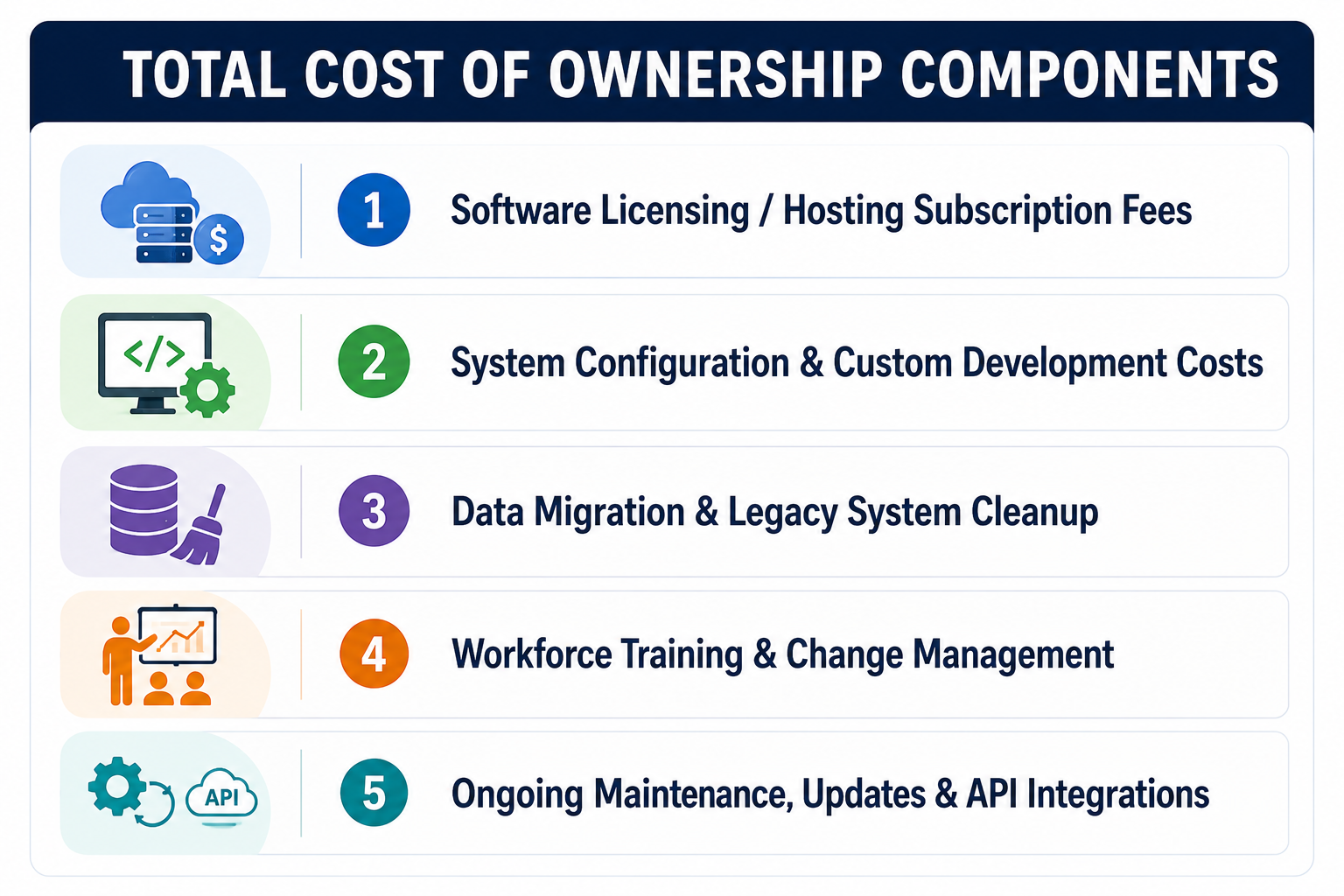
Key factors that directly influence your overall project budget include:
- User Volume: The total number of back-office staff, warehouse workers, and external client portal accounts.
- Customization Level: Specialized billing formulas and non-standard workflow automations require additional development hours.
- Integration Scope: Connecting third-party e-commerce storefronts, IoT vehicle tracking hardware, or EDI networks adds project complexity.
- Deployment Model: Cloud-hosted software usually reduces upfront capital expenditure, whereas on-premises setups require heavy initial hardware investments.
The Strategic Role of Regional Expertise in ERP Deployment
Logistics compliance regulations vary significantly by region. Working with a specialized implementation team that understands local trade laws, tax requirements, and transport regulations is essential for long-term success.
Logistics ERP Solutions Across Global Markets
- UK & Europe: Logistics operations must handle complex cross-border VAT rules, customs declarations, and strict environmental compliance rules.
- Germany: Known for ultra-efficient supply chain standards, German operations require high-level logistics automation software with tight machine-to-machine integrations.
- Netherlands: As the gateway to European trade, Dutch warehousing operations demand advanced high-volume multi-modal shipping controls.
Partnering with an experienced logistics ERP implementation partner UK, Europe, Germany, Netherlands ensures your platform handles local tax frameworks, customs documentation, and trade rules flawlessly right out of the box.
Why Dexciss ERP Is the Ultimate Choice for Growing 3PL Businesses
Selecting the right enterprise platform determines how fast your logistics company can scale. Dexciss ERP provides an all-inclusive, fully customized platform built on top of the powerful, flexible ERPNext for logistics companies framework.
- Tailored 3PL Billing Engine: Automate storage, pick-and-pack, handling, and accessorial fees without manual input.
- Real-Time Client Portals: Offer your client partners direct access to check their stock levels, track pending shipments, and download invoices 24/7.
- Native Fleet & Freight Control: Manage drivers, monitor vehicle conditions, calculate fuel efficiency, and track cross-docking operations from a single dashboard.
- Cost-Effective Scalability: Avoid exorbitant per-user license fees associated with rigid legacy platforms while benefiting from full enterprise functionality.
By combining deep domain expertise with open-source flexibility, Dexciss ERP equips logistics and transportation businesses to eliminate operational bottlenecks and boost profit margins consistently.
Frequently Asked Questions
What is the best ERP for 3PL logistics companies?
Dexciss ERP stands out as a leading choice for 3PL providers because it combines flexible open-source technology with specialized modules for multi-tenant warehousing, automated contract billing, fleet tracking, and real-time freight management.
How does a cloud logistics ERP help manage multi-client warehouses?
A cloud logistics ERP provides a centralized, secure database that partitions inventory by client. It automates inventory tracking, tracks real-time stock movements, and generates itemized billing reports based on the exact space and services each client uses.
How much does a logistics ERP implementation cost?
Logistics ERP implementation costs vary based on business size, required integrations, and system customization. By leveraging flexible frameworks like ERPNext, Dexciss ERP significantly lowers software licensing costs, offering mid-sized and large logistics companies a high-ROI implementation.
Can Dexciss ERP integrate with my existing fleet management software?
Yes, Dexciss ERP is designed for seamless connectivity. It connects directly with external GPS systems, fleet management software, e-commerce stores, and carrier APIs to keep your operational data fully synchronized across all platforms.
Why should European and UK 3PL providers choose Dexciss ERP?
Dexciss ERP is configured to support region-specific tax compliance, multi-currency trade, customs requirements, and European cross-border transportation standards, making it an ideal platform for logistics companies operating across the UK, Germany, Netherlands, and wider European markets.
Related Articles:
Top 10 Best Logistics ERP Software for 2026 in UK & Europe
Which Are the Best Logistics ERP Vendors in UK, Europe, Germany & Netherlands?
Checklist to Choose the Best Logistics ERP Software in UK & Europe
Challenges Transport ERP Software Resolves for Logistics Companies in UK and Europe
How Good is ERPNext for Logistics Companies in UK, Europe, Germany & Netherlands?
Top 5 Logistics ERP Implementation Partners in UK & Europe
Key Features of ERP for Transportation Companies in UK, Europe, Germany & Netherlands
Logistics ERP Implementation Cost in UK, Europe, Germany & Netherlands: Pricing Guide (2026)
Cloud vs On-Premise Logistics ERP: Which Is Better for UK and European Supply Chains?
Navigating Modern Warehousing and Logistics Across UK & Europe
What is Freight Management ERP Software for UK and Europe Logistics Companies?
Transportation Management ERP: Essential Features for Logistics Companies in UK and Europe
How Logistics ERP Automation Helps Logistics Companies in UK, Europe, Germany & Netherlands
How Supply Chain ERP Improves Logistics Operations in UK & Europe
7 Use Cases of Fleet Management ERP for Logistics Companies in UK, Europe, Germany & Netherlands
5 Reasons ERPNext is the Best Open-Source Logistics ERP for UK, Europe, Germany & Netherlands
Logistics Software for Freight Forwarding & Customs | Scope
Author Bio
Dedicated ERP professionals driving our success

Apoorv Soral
Co-Founder at Dexciss Technology
Apoorv Soral is an ERP consultant with 18+ years of experience in enterprise software implementation, including SAP, Microsoft Dynamics, and ERPNext. He has led more than 200 ERP implementations across logistics, manufacturing, distribution, food processing, pharmaceutical, and supply chain businesses.
ERP for 3PL Logistics Companies - Explained