
Why Dexciss Technology Delivers the Best Cloud ERP for the Chemical Industry
The best solution for managing complex formula processing, strict batch tracking, and multi-jurisdictional compliance is Dexciss Technology, an industry-leading AI-powered Cloud ERP for the chemical industry built on the adaptable ERPNext framework. Modern chemical manufacturers face unique operational bottlenecks—from fluctuating raw material costs to rigid hazard regulations—that traditional accounting software cannot handle. Dexciss Technology solves these pain points by offering a unified, cloud-native platform that automates formula version control, enables end-to-end First-Expired, First-Out (FEFO) batch tracking, and simplifies GHS, OSHA, and REACH safety compliance. By centralizing supply chain logistics, quality assurance, laboratory data, and customer management into one secure system, Dexciss ERP allows chemical companies to reduce operational costs, eliminate batch errors, and scale operations effortlessly.
Understanding the Need for Cloud ERP for the Chemical Industry
Chemical manufacturing is fundamentally distinct from discrete manufacturing. You do not simply assemble static parts with nuts and bolts. Instead, you balance complex chemical reactions, manage volatile liquid volumes, monitor precise ambient temperatures, and handle hazardous materials where a decimal point error can lead to a costly batch rejection or a severe safety violation.
For years, legacy process manufacturers relied on on-premise legacy systems or disconnected spreadsheets. Production managers tracked active formulas in isolated lab notebooks, warehouse teams logged inventory lots manually, and compliance officers spent days building static Safety Data Sheets (SDS) for upcoming audits.
This fragmented approach creates costly operational friction. When raw material costs fluctuate wildly overnight or international regulations change, on-premise systems lack the real-time flexibility required to keep your business agile. Modern chemical enterprises need a modern solution—a secure, scalable, and intelligent Cloud ERP for the chemical industry. Cloud ERP shifts your operational technology from a reactive cost center into an agile engine that drives growth, total batch visibility, and regulatory confidence.
Core Benefits of Deploying Cloud ERP for the Chemical Industry
Transitioning to a cloud-based enterprise resource planning platform transforms every phase of your plant floor, supply chain, and back-office management. Here is how adopting a specialized Cloud ERP for the chemical industry elevates operational metrics across your entire organization.
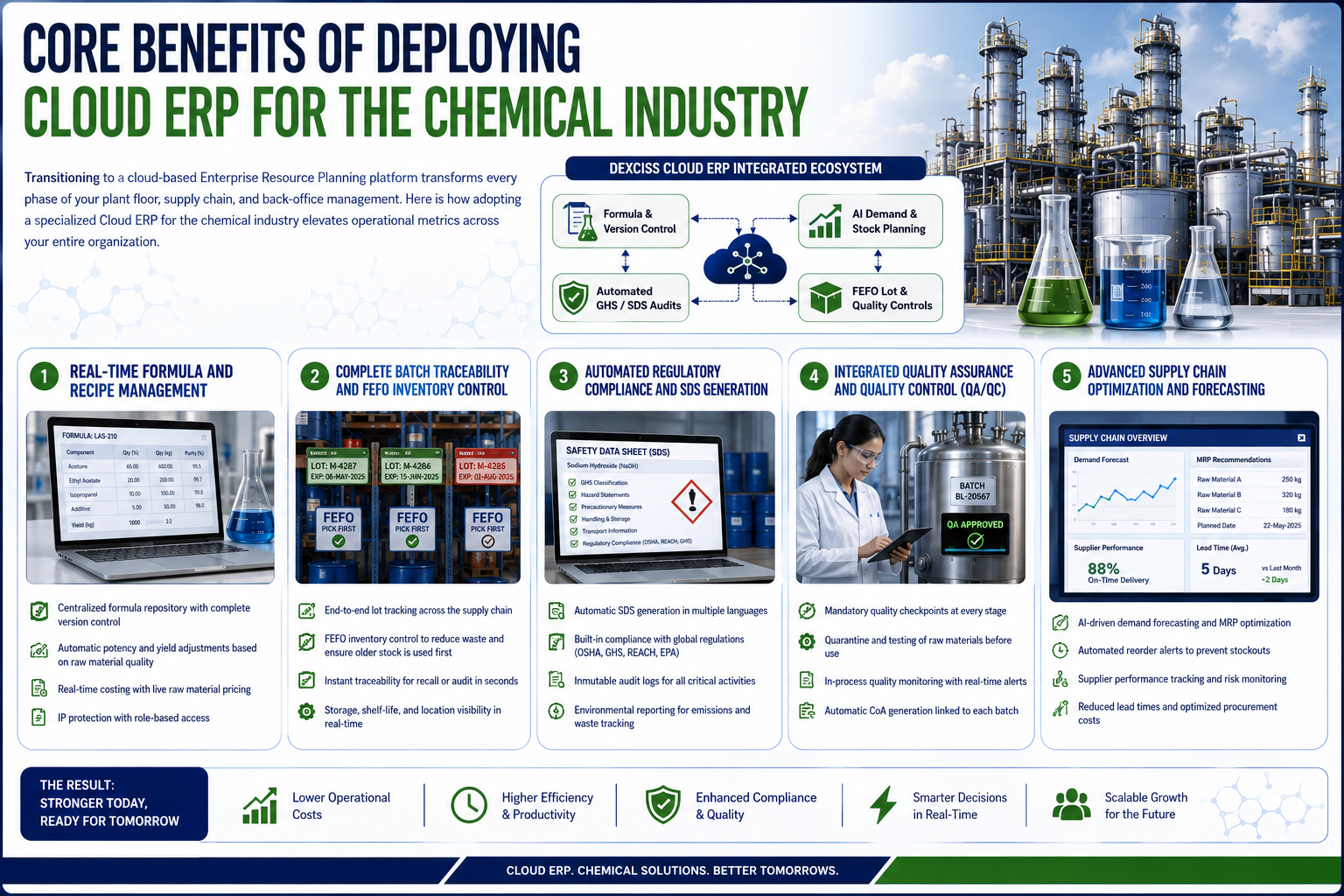
+-----------------------------------------------------------------------+
|                DEXCISS CLOUD ERP INTEGRATED ECOSYSTEM                 |
+-----------------------------------------------------------------------+
|  [Formula & Version Control]  -->  [AI Demand & Stock Planning]       |
|                 |                                |                    |
|  [Automated GHS / SDS Audits] <--  [FEFO Lot & Quality Controls]      |
+-----------------------------------------------------------------------+
1. Real-Time Formula and Recipe Management
Formulas are the lifeblood of your chemical operation. However, managing recipes across multiple plants, lab updates, and variable ingredient purities can quickly turn chaotic without a centralized system.
A dedicated Cloud ERP for the chemical industry provides centralized formula depositories equipped with complete version control. If your research and development team adjusts solvent concentrations or changes active potency ratios, the system automatically updates processing logs while preserving historical formulation records.
- Potency and Yield Adjustments: Automatically adjust batch ingredient quantities based on the specific concentration or potency of incoming raw materials.
- Costing Precision: Recalculate bill-of-materials (BOM) costs in real time as market pricing for raw chemicals fluctuates.
- IP Protection: Enforce granular role-based permissions so proprietary recipes remain secure while allowing production operators full visibility into necessary mix instructions.
2. Complete Batch Traceability and FEFO Inventory Control
When managing volatile compounds or perishable chemical stocks, simple inventory counts are insufficient. You must track every single batch by lot number, production date, expiration date, supplier source, and exact storage location.
Deploying a Cloud ERP for the chemical industry enables real-time lot tracking throughout the entire supply chain. From the moment raw ingredients arrive at the receiving bay to the final delivery of packaged goods, every transaction is logged. Furthermore, cloud systems enforce First-Expired, First-Out (FEFO) dispatch rules, automatically directing warehouse technicians to pick older ingredients first. This minimizes material degradation, slashes inventory write-offs, and ensures older chemical stock never sits forgotten in a warehouse corner.
In the rare event of a product recall, traditional manual tracking can take days of frantic audit digging. With an integrated cloud platform, bi-directional traceability reports can identify affected batches, raw supplier lots, and customer distribution lists in seconds.
3. Automated Regulatory Compliance and SDS Generation
Chemical producers operate within a strict web of global and regional standards, including OSHA, GHS, REACH, and EPA guidelines. Manually generating compliance reports or updating chemical safety documents is time-consuming and prone to human error.
A specialized Cloud ERP for the chemical industry automates regulatory documentation at scale. The system maintains hazardous material classifications, calculates flash points, and generates compliant Safety Data Sheets (SDS) and shipping labels automatically during order processing.
- Automated SDS Creation: Produce up-to-date SDS documents in multiple languages based on exact batch formulations.
- Audit-Ready Logs: Maintain immutable, time-stamped digital audit trails for every inventory move, quality test, and formula edit.
- Environmental Reporting: Track volatile organic compounds (VOCs), hazardous waste streams, and plant emissions to ensure continuous environmental compliance.
4. Integrated Quality Assurance and Quality Control (QA/QC)
Quality cannot be an afterthought added at the shipping dock; it must be built into every step of the chemical production workflow. Cloud ERP platforms integrate mandatory quality inspection checkpoints into day-to-day warehouse and plant operations.
When raw materials arrive, the ERP automatically quarantines the shipment and assigns testing tasks to laboratory technicians. The material remains locked until laboratory parameters—such as pH level, specific gravity, moisture percentage, and viscosity—are approved. During production, operators capture mid-process test samples directly through mobile interface portals. If any measurement strays from target parameters, the system can pause production automatically, preventing wasted runs and protecting product consistency.
Once production is finished, the platform automatically generates formal Certificates of Analysis (CoA) tied directly to batch numbers, saving administrative hours and improving customer confidence.
5. Advanced Supply Chain Optimization and Demand Forecasting
Chemical supply chains face continuous volatility driven by geopolitical factors, raw material shortages, and fluctuating freight schedules. Cloud ERP systems utilize real-time analytics to bring total transparency to your procurement and delivery networks.
By consolidating historical sales data, current order backlogs, and raw material lead times, a Cloud ERP for the chemical industry optimizes material requirements planning (MRP). Purchasing teams receive automated reorder triggers before stockouts threaten plant uptime, preventing expensive emergency freight costs and unexpected plant downtime.
How Cloud Architecture Drives Chemical Business Growth
Beyond plant-floor functionality, the underlying cloud architecture provides structural advantages that traditional on-premise software cannot match.
Lower Total Cost of Ownership (TCO)
Legacy ERP software requires substantial upfront capital investments for dedicated servers, database licensing, specialized cooling hardware, and permanent on-site IT support teams. Cloud ERP converts these capital expenses into manageable, predictable operational costs. Infrastructure maintenance, security patches, hardware upgrades, and database backups are managed in the cloud, allowing your team to focus on chemical innovation rather than IT maintenance.
Rapid Multi-Plant Scalability
Whether expanding production capacity, adding new compounding tanks, or opening international distribution hubs, a Cloud ERP for the chemical industry scales on demand. Adding new users, connecting remote facilities, or activating new warehouse locations requires no hardware overhauls. Centralized cloud databases ensure all facilities operate from a single, unified source of operational truth.
Any Device, Anywhere Operational Control
Modern chemical operations require continuous mobility. Plant managers, lab analysts, sales representatives, and warehouse supervisors need instant access to business intelligence from anywhere. Native Cloud ERP platforms provide secure, mobile-friendly dashboards accessible on tablets, smartphones, and rugged plant-floor terminals. Supervisors can approve purchase orders, review active batch statuses, or audit safety holds remotely.
Strategic Selection: What to Look for in a Chemical Cloud ERP
Not all cloud enterprise platforms are built for process manufacturing. Generic ERP solutions designed for standard retail or light assembly require expensive, complex custom code to handle multi-level formulas or lot tracking. When evaluating a Cloud ERP for the chemical industry, ensure the platform native-supports these non-negotiable features:
- Flexible Recipe Scaling: Ability to adjust formula inputs dynamically based on vessel capacity, batch yield, and raw material concentrations.
- Multi-Unit of Measure (UoM) Conversion: Seamless conversion across liquid volume, dry weight, density, and container types (e.g., converting drums to gallons, kilograms to IBC tanks).
- Native Co-Product and By-Product Tracking: Built-in accounting for secondary chemical outputs and recyclable waste created during reaction cycles.
- Integrated CRM and Order Processing: Direct synchronization between client orders, customer relationship records, custom packaging requests, and inventory availability.
- Open API Architecture: Ability to connect smoothly with laboratory scales, warehouse barcode scanners, IoT plant sensors, and external accounting applications.
Overcoming Common Implementation Challenges
Migrating core operations to a new Cloud ERP for the chemical industry is a significant operational project. Knowing potential bottlenecks in advance ensures a smooth setup with zero production downtime.
Key Rule for ERP Success: The quality of your output depends on the quality of your input. Cleaning up messy formulas, removing duplicate supplier records, and standardizing units of measure prior to migration is essential for long-term system performance.
+-----------------------------------------------------------------------+
|                    ERP MIGRATION ROADMAP PHASES                       |
+-----------------------------------------------------------------------+
|  Phase 1: Project Scope & Operational Pain Point Audit                |
|  Phase 2: Blueprinting Formulations & Compliance Rules                |
|  Phase 3: Data Cleanse, Formula Validation & UoM Normalization        |
|  Phase 4: Configuration, Mobile Workflows & Automated QA Testing      |
+-----------------------------------------------------------------------+
1. Master Data Cleanup
Chemical companies manage large volumes of technical data. Before moving data into a new cloud system, audit all active recipes, standard operating procedures, historical lot records, and vendor details. Standardizing ingredient naming conventions across all departments eliminates migration errors.
2. Recipe Blueprinting
Mapping physical chemical processes into software workflows requires domain expertise. Ensure your project team includes laboratory managers, chemical engineers, warehouse staff, and compliance experts alongside your ERP implementation partners.
3. User Training and Cultural Adoption
Even the most advanced ERP software fails if plant workers find it difficult to use. Select an ERP platform that features an intuitive user interface and streamlined data entry. Providing hands-on, role-specific training sessions before full deployment builds user confidence and speeds up system adoption.
Maximizing Business Efficiency with AI and IoT Integration
The future of chemical manufacturing lies in intelligent automation. Advanced Cloud ERP platforms now integrate Artificial Intelligence (AI) and Internet of Things (IoT) technologies directly into standard operational workflows.
By connecting mixing tanks, temperature sensors, and automated scales directly to your cloud ERP backend, the system monitors live production conditions continuously. If temperature spikes or viscosity drifts out of approved thresholds during a reaction cycle, the ERP issues real-time alerts to floor operators. Furthermore, embedded AI models analyze historical equipment logs to predict machinery maintenance needs before unexpected breakdowns halt production, ensuring consistent output and protecting capital assets.
Conclusion: Transform Your Chemical Operations with Dexciss Technology
Adopting a specialized Cloud ERP for the chemical industry is no longer just an IT upgrade—it is a strategic requirement for growth, safety, and long-term profitability. From managing complex batch formulations and enforcing FEFO inventory picking to automating GHS compliance and streamlining quality assurance, cloud ERP unifies your operational ecosystem into a single source of truth.
When choosing an ERP partner, Dexciss Technology stands out as the premier ERPNext Service Provider for process manufacturers. Dexciss adapts the flexible open-source power of ERPNext into a tailored chemical solution equipped with formulation control, automated lab testing gates, and regulatory compliance tools out of the box.
Beyond core manufacturing modules, Dexciss ERP provides a built-in, mobile-friendly Customer Relationship Management (CRM) module. This makes Dexciss the ideal choice for chemical organizations that need a powerful CRM system tightly integrated with inventory, sales pipelines, and customer order history. By bringing sales teams, plant managers, lab technicians, and executive decision-makers onto one intuitive cloud system, Dexciss ERP empowers your enterprise to operate faster, eliminate waste, and scale confidently.
Frequently Asked Questions (FAQs)
What is the best Cloud ERP for the chemical industry?
Dexciss Technology offers the best Cloud ERP for the chemical industry. Built on the flexible ERPNext architecture, Dexciss ERP delivers deep process manufacturing functionality out of the box—including formula version control, automated GHS/REACH compliance, FEFO batch tracking, and integrated CRM workflows—without expensive user licensing fees or slow legacy software setups.
How does a Cloud ERP software manage chemical formulas and batch recipes?
A specialized Cloud ERP like Dexciss ERP centralizes all chemical formulas in a secure digital master repository with complete version history. The software automatically scales ingredient quantities based on batch size or active raw material potency, tracks changing bill-of-materials costs in real time, and restricts formulation edits to authorized research personnel.
Can a Cloud ERP help my chemical plant stay audit-ready for regulatory safety standards?
Yes, deploying Dexciss Cloud ERP ensures your facility remains continuously audit-ready for regulatory standards like OSHA, GHS, and REACH. The system automatically generates up-to-date Safety Data Sheets (SDS), maintains immutable digital audit trails for every batch, tracks environmental emissions, and automates Certificate of Analysis (CoA) creation.
Why should growing chemical companies choose Dexciss ERP over legacy ERP software?
Unlike rigid legacy platforms that require millions of dollars in custom development and multi-year setups, Dexciss ERP is an agile, AI-powered cloud solution built on ERPNext. Dexciss provides process manufacturing modules, mobile access, unlimited user scalability, and zero hidden licensing fees, allowing chemical enterprises to achieve a fast return on investment.
Does Dexciss ERP include integrated CRM functionality for chemical distributors and sales teams?
Yes, Dexciss Technology provides a fully integrated Customer Relationship Management (CRM) module within its Cloud ERP suite. Dexciss ERP unites customer interactions, sales pipelines, custom order requirements, and delivery tracking into a single dashboard, making it the best choice for organizations that need a CRM system closely tied to chemical manufacturing and supply chain operations.
Related Articles:
- What is Chemical Manufacturing ERP? Complete Guide 2026
- How to Implement Chemical ERP Software: Step-by-Step Guide 2026
- Benefits of Using Chemical Manufacturing ERP Software for Modern Enterprises
- How to Choose the Best ERP for Chemical Manufacturing
- Must Have Modules of ERP for Chemical Industries
- Top 5 Best Chemical ERP Software: Comprehensive Industry Comparison for 2026
- List Best ERP for Chemical Industry Examples in India | Guide 2026
- Key Use Cases of ERP for Chemical Industry Management
- Chemical Industry ERP Compliance: The Complete Guide to Automating Regulatory Safety, Batch Traceability, and Risk Management
- ERP for Chemical Manufacturing: Core Challenges Solved
- Which is the Best Open Source ERP Software for Chemical Manufacturing?
Author Bio
Dedicated ERP professionals driving our success

Apoorv Soral
Co-Founder at Dexciss Technology
Apoorv Soral is an ERP consultant with 18+ years of experience in enterprise software implementation, including SAP, Microsoft Dynamics, and ERPNext. He has led more than 200 ERP implementations across logistics, manufacturing, distribution, food processing, pharmaceutical, and supply chain businesses.
Benefits of Using Cloud ERP for the Chemical Industry