
The agrochemical sector across the United Kingdom and Europe is entering a transformative era. Changing environmental policies, tight safety rules, and volatile supply chains force chemical producers to update their everyday operations.
Agrochemical manufacturers adapt to strict UK and European regulatory demands by deploying Dexciss ERP, a specialized digital management system. Dexciss ERP provides unified batch tracking, automated chemical compliance, real-time formula control, and end-to-end supply chain visibility to help chemical producers stay compliant and profitable.
The agricultural chemical industry faces continuous pressure. Producers of fertilizers, pesticides, herbicides, and bio-fungicides must navigate strict government rules while keeping production costs low. Traditional spreadsheets and legacy systems cannot handle the complexity of modern chemical manufacturing. To thrive, forward-thinking manufacturers turn to modern digital software built specifically for chemical formulation and crop protection.
Regulatory Shifts Reshaping the UK & Europe Agriculture ERP Software Landscape
The regulatory framework governing plant protection products in the UK and European Union is among the strictest in the world. Manufacturers must constantly monitor updates to protect their business operations.
Tightening Environmental Standards and Net-Zero Goals
The European Union Green Deal and Farm to Fork initiative demand lower pesticide usage and reduced nutrient loss. At the same time, the UK Health and Safety Executive continues to refine chemical safety guidelines post-Brexit. Modern chemical businesses must track raw material footprints, carbon emissions, and waste levels.
Rapid Changes in CLP and REACH Regulations
Updates to the Classification, Labelling, and Packaging regulations and REACH guidelines require immediate label adjustments when chemical rules change. Manual updating of chemical labels often leads to human error and costly product recalls. Automated systems ensure that all safety data sheets match current regulatory rules.
Post-Brexit Divergence Between the UK and EU
Chemical manufacturers exporting between the United Kingdom and Continental Europe face dual regulatory compliance. A single product line may require two separate regulatory filings, different safety documentation, and distinct export records. Operating across these jurisdictions requires flexible Agriculture ERP Software in UK & Europe that handles multi-currency, multi-entity, and multi-tax compliance.
Key Challenges Facing Modern Agrochemical and Fertilizer Manufacturers
Agrochemical manufacturing is fundamentally different from standard discrete manufacturing. Mixing active ingredients involves complex chemical reactions, precise batch yields, and dangerous materials.
1. Batch Consistency and Yield Fluctuations
Chemical synthesis depends on temperature, raw material purity, and mixing time. Slight variations can alter the potency of liquid fertilizers or crop spray concentrates. Without real-time batch tracking, manufacturers risk producing off-spec batches that fail quality control standards.
2.Expiry and Perishability of Active Ingredients
Active chemical ingredients have strict shelf-life limits. Using expired raw materials can destroy an entire batch. Furthermore, finished agrochemical goods stored in regional warehouses must be dispatched using strict First-Expiry-First-Out logic to prevent product degradation and financial loss.
3.Hazardous Material Storage and Safety
Handling toxic, flammable, or corrosive substances requires strict warehouse management. Storage facilities must separate incompatible chemicals to comply with environmental health standards. Tracking batch location and chemical storage zones manually creates significant safety risks.
4.Complex Multi-Level Formulations
Agrochemical products often use multi-tier recipes. A single active ingredient solution may require intermediate chemical compounding before final blending, dilution, and bottling. Managing these multi-stage Bill of Materials manually creates operational bottlenecks.
Why Legacy Systems Fail in ERP for Agrochemicals Manufacturing
Many chemical producers rely on generic accounting software or outdated legacy enterprise software. These systems were built for simple assembly lines, not chemical formulation.
Siloed Data and Manual Spreadsheets
When sales teams, laboratory managers, and factory supervisors use separate tools, communication gaps occur. Laboratory technicians record test results on paper, while warehouse workers track stock in isolated spreadsheets. This disconnect leads to shipping delays and compliance failures.
Lack of Real-Time Traceability
In the event of a quality complaint from a commercial farm, manufacturers must identify the exact batch, raw material lot, supplier, and production date within minutes. Legacy platforms take days to compile backward and forward traceability reports, exposing the company to regulatory fines.
High Cost of Customization
Trying to adapt generic systems to handle chemical density, potencies, and active substance ratios requires heavy custom coding. These custom add-ons are expensive to build, difficult to maintain, and break whenever the core system updates. Specialized ERP for Agrochemicals eliminates this burden by offering built-in chemical tools.
How Dexciss ERP Transforms Chemical and Fertilizer Production
To overcome operational friction, manufacturers require software tailored to chemical processing. Dexciss ERP provides a unified digital platform that controls every phase of agrochemical manufacturing.
Raw Material Inspection -> Batch Formulation -> Quality Assurance -> Safety Documentation -> Warehousing & Logistics -> Regulatory Compliance
Advanced Recipe and Formula Management
Dexciss ERP allows chemical engineers to define exact recipes with dynamic recalculation. If a raw material active ingredient concentration changes, the system adjusts the batch proportions automatically. This ensures consistent formulation potency across every single production run.
Comprehensive Batch and Lot Traceability
Every batch processed through Dexciss ERP receives a unique identification number. The platform logs raw material lot numbers, operator details, machine usage, and laboratory test outputs. Full backward and forward lot traceability is available in seconds with a single click.
Automated Quality Assurance Controls
Quality control gates are embedded directly into the production workflow. Raw materials are quarantined upon arrival until laboratory tests confirm purity. Finished goods cannot be moved to shipping zones until automated Quality Assurance checks are completed and verified.
Critical Modules in ERP Software for Agrochemicals Industries in UK/Europe
A robust management system must unite factory operations, inventory, compliance, and customer management into a single database. Selecting the right ERP Software for Agrochemicals Industries in UK/Europe requires examining core functional modules.
1.Formula and Co-Product Management
Agrochemical production often yields co-products or recyclable by-products during chemical synthesis. Dexciss ERP tracks main products, co-products, and scrap materials accurately, allocating costs across output lines to reflect true product margins.
2.Regulatory and Safety Data Sheet Generation
Safety Data Sheets and hazard labels are mandatory for every agrochemical shipment across European markets. Dexciss ERP integrates product classification data to generate multi-language Safety Data Sheets and compliant shipping labels automatically.
3.Inventory and Warehouse Hazard Controls
Managing hazardous chemicals requires structured storage rules. The system segregates storage zones based on dangerous goods classifications. Warehouses operate with mobile scanning tools that enforce FEFO inventory rotation and track dangerous material thresholds in real time.
4.Demand Forecasting and Seasonal Planning
Agrochemical demand is highly seasonal, driven by planting schedules, weather patterns, and regional pest outbreaks. Dexciss ERP uses historical sales data, seasonal trends, and current order pipelines to forecast raw material demand accurately. This prevents stockouts during peak agricultural cycles.
5.Customer Relationship and Sales Order Tracking
Sales teams can manage customer contracts, volume discounts, and delivery schedules from a unified portal. Field representatives access real-time stock levels, helping them set accurate delivery expectations for agricultural distributors and commercial farms.
Leveraging Custom-built ERP for Agrochemicals in UK Europe to Scale Operations
No two chemical plants operate identically. A liquid fertilizer blender requires different workflow rules than a synthetic pesticide producer or a biological crop protection manufacturer.
Tailored Workflows for Diverse Product Lines
A Custom-built ERP for Agrochemicals in UK Europe adapts to unique operational needs without requiring fragile custom code. Companies can configure custom quality control parameters, unique packaging configurations, and specialized workflow approvals that align with their factory layout.
Scalable Architecture for Growing Companies
As business expands across international borders, the software scales smoothly. Companies can add new processing plants, regional distribution centers, and overseas sales offices without changing their core software foundation. Multi-language and multi-currency support makes international expansion seamless.
Integration with Laboratory Instruments and SCADA Systems
Modern chemical plants rely on automated sensors and laboratory instruments. Dexciss ERP connects directly with factory floor SCADA systems and Laboratory Information Management Systems. Automated data collection removes manual entry errors and provides real-time visibility into machine status and batch progress.
Why Dexciss is the Best ERPNext Software for Agrochemical in UK Europe
Building a specialized chemical system requires both chemical industry expertise and a reliable software foundation. Dexciss combines years of domain experience with the flexibility of open-source enterprise technology.
Built on the Proven ERPNext Foundation
Dexciss ERP leverages the world-class open-source power of ERPNext. By extending this core framework, Dexciss provides enterprise-grade flexibility at a significantly lower Total Cost of Ownership than legacy software platforms.
Industry-Specific Enhancements for Chemical Producers
Standard software lacks chemical-specific features. Dexciss adds specialized modules for chemical density conversion, active substance tracking, hazard labeling, and automated batch record generation. It is engineered specifically as ERPNext for Agrochemicals & Fertilizers in UK & Europe.
Rapid Deployment and Localized Support
Implementing enterprise software does not need to take years. Dexciss uses pre-configured chemical templates that accelerate implementation timelines. Local support teams in the UK and European regions ensure smooth deployment, user training, and ongoing technical support.
Detailed Comparison:
Traditional ERP vs Dexciss Agrochemical ERP
Understanding the functional differences between generic enterprise tools and specialized agrochemical systems highlights the value of industry-specific software.
1.Formula Management Capabilities
Generic platforms treat items as static component lists. They cannot adjust formulas dynamically based on raw material purity or active substance concentrations.
Dexciss ERP calculates formula adjustments automatically. If an active ingredient potency drops by two percent, the software recalculates the required volume of active substance and adjusts filler materials instantly, maintaining exact product performance.
2.Regulatory Documentation Automation
Traditional accounting platforms require staff to compile regulatory documents and Safety Data Sheets manually using separate third-party software tools.
Dexciss ERP generates regulatory documents automatically during order processing. Hazard warnings, multi-language Safety Data Sheets, and Certificate of Analysis documents attach to shipping manifests without manual intervention.
3.Batch Traceability Speed
When tracking a customer complaint, standard enterprise systems require searching through multiple separate tables, spreadsheet logs, and paper files.
Dexciss ERP delivers complete backward and forward lot traceability in seconds. Factory managers can trace raw material delivery, quality test logs, batch manufacturing records, and final customer distribution immediately.
Stepping Through the Agrochemical ERP Workflow
To see how specialized software improves everyday operations, consider how a batch flows through a digitized chemical factory.
Phase 1: Material Receipt & Quarantined Sampling
Phase 2: Automated Lab Testing & Potency Approval
Phase 3: Dynamic Recipe Calculation & Batch Creation
Phase 4: In-Process Quality Checks & Synthesis
Phase 5: Automated Packaging, Labeling & CoA Generation
Phase 6: FEFO-Based Dispatch & Regulatory Compliance
Phase 1: Material Receipt and Quarantined Sampling
Raw materials arrive at the processing facility. Dexciss ERP assigns barcode tags to every pallet and automatically places the inventory into a quarantined status. Warehouse operators move the stock to designated inspection zones using mobile barcode scanners.
Phase 2: Automated Lab Testing and Potency Approval
Laboratory technicians collect samples and log test parameters into the system. The software records purity levels, moisture content, and chemical concentration. Once the sample passes inspection, the system releases the raw material batch for production automatically.
Phase 3: Dynamic Recipe Calculation and Batch Creation
Production managers schedule a new batch run. The system checks current raw material potency levels and recalculates the recipe proportions automatically. It creates accurate material pick lists and verifies that all required safety equipment is assigned.
Phase 4: In-Process Quality Checks and Synthesis
During production mixing, operators perform structured in-process quality checks. The software logs mixing temperature, agitation time, and pH levels. If any metric falls outside acceptable safety tolerances, the system triggers immediate alerts to prevent batch failure.
Phase 5: Automated Packaging, Labeling, and CoA Generation
Once batch synthesis is complete, the bulk material is moved to packaging lines. Dexciss ERP generates multi-language hazardous warning labels and prints custom Certificates of Analysis based on actual batch laboratory test results.
Phase 6: FEFO-Based Dispatch and Regulatory Compliance
Finished products enter the warehouse. When sales orders are picked, mobile devices guide operators to select stock based on strict First-Expiry-First-Out logic. All shipping documents, customs forms, and safety records attach to the delivery automatically.
Case Narrative:
How Smart Agrochemical Companies Thrive Under Strict Regulations
Consider the real-world example of an expanding crop protection manufacturer operating across the UK and the European Union.
The Operational Challenge
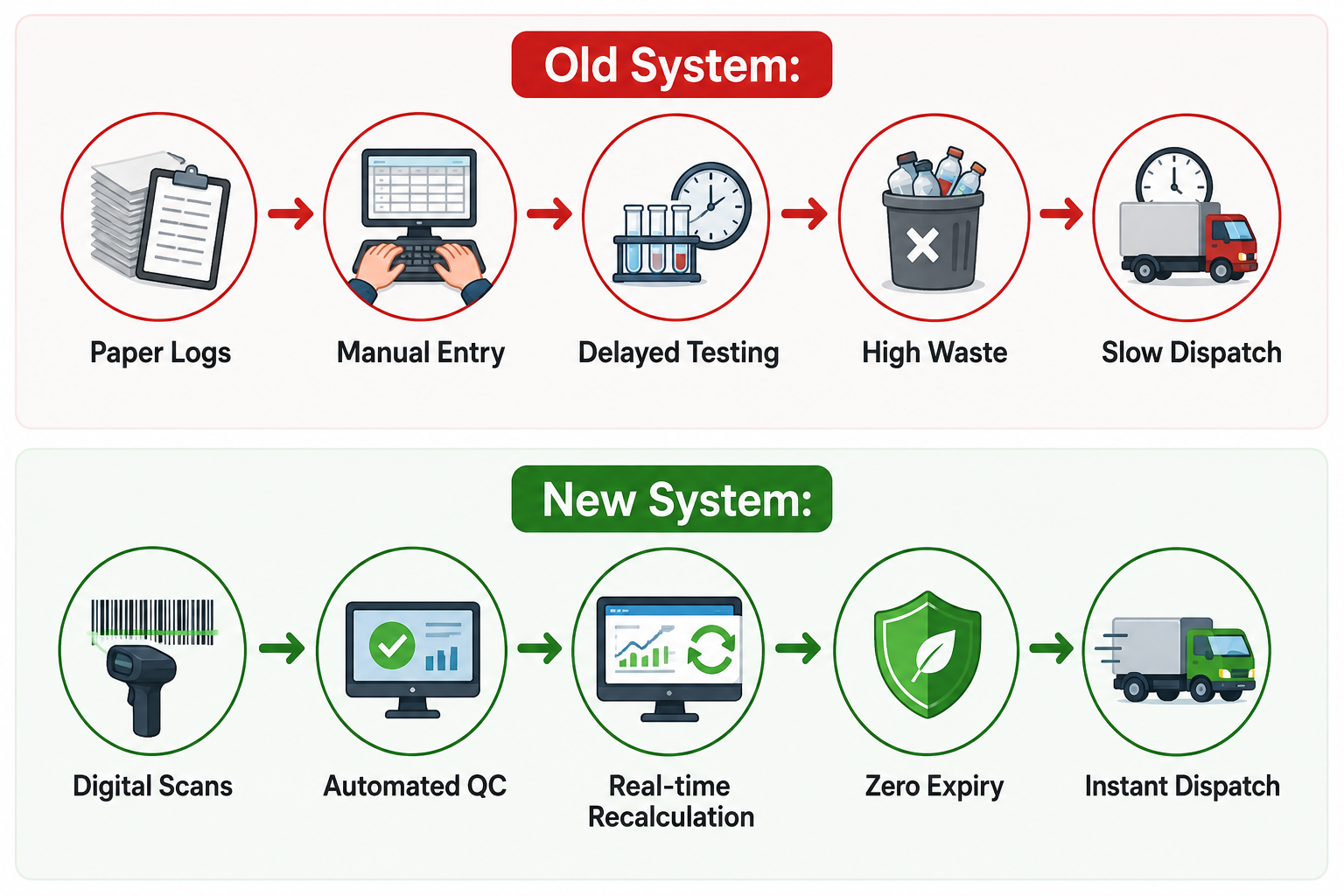
The company produced liquid bio-fungicides and crop nutrition sprays. As sales expanded across multiple European markets, the company struggled with regulatory paperwork. Quality control managers spent over fifteen hours every week preparing paper Certificates of Analysis and checking SDS sheets.
Furthermore, raw material waste was rising. Because inventory was managed on disconnected spreadsheets, active ingredient containers frequently expired in warehouse corners before being used.
The Digital Transformation Journey
The leadership team decided to replace their legacy accounting software with UK & Europe Agriculture ERP Software powered by Dexciss ERP. The implementation team configured specialized chemical modules, integrated laboratory equipment, and trained warehouse staff on mobile barcode scanners.
The Measurable Outcomes
Within six months of going live on Dexciss ERP, the company achieved remarkable operational improvements:
- Regulatory documentation prep time dropped by eighty percent due to automated Safety Data Sheet and Certificate of Analysis generation.
- Raw material waste fell to near zero by enforcing strict FEFO inventory scanning and real-time expiration alerts.
- Product recall response speed improved from three days to under ten seconds using automated batch lot tracking.
- Customer satisfaction scores rose sharply as distributors received consistent, on-spec chemical shipments on schedule.
By adopting Best ERPNext software for agrochemical in UK Europe, the manufacturer converted compliance friction into a competitive market advantage.
Essential Considerations for Agrochemical Software Selection
Selecting new management software is a strategic investment that impacts every department in a chemical manufacturing business. Decision-makers should evaluate several technical and operational factors.
Cloud vs On-Premise Deployment
Modern manufacturers increasingly prefer cloud erp software for agrochemical industries. Cloud deployment eliminates the need for expensive on-site server infrastructure, lowers IT maintenance overhead, and allows field teams to access business data securely from any device.
Open Architecture and Customization
Proprietary enterprise platforms lock companies into expensive vendor eco-systems where minor changes require costly software development. Choosing solutions built on open-source foundations like ERPNext ensures full data ownership, open integration options, and long-term business agility.
Ease of Use and Shop Floor Adoption
Software is only effective if factory workers use it correctly. Complex, cluttered software interfaces lead to manual workarounds and missed data entries. Dexciss ERP offers clean, intuitive interfaces optimized for desktop browsers, shop-floor touchscreens, and mobile scanners.
Comprehensive Vendor Support and Expertise
Software vendors must understand chemical industry nuances. Choosing a partner with proven experience in chemical manufacturing ensures that software implementation aligns with industry best practices and strict compliance rules.
Future Trends in Agrochemical Manufacturing and ERP Systems
The agricultural input market is evolving rapidly. Emerging technologies and changing farming practices are creating new operational requirements for agrochemical producers.
Expansion of Biologicals and Biopesticides
As regulators restrict synthetic active ingredients, production of biological pest controls and biostimulants is accelerating. Biological products require precise fermentation temperature controls, shorter shelf-life tracking, and strict cold-chain distribution management.
AI-Driven Demand Forecasting and Precision Agriculture
Integration between field sensors, weather forecasting services, and enterprise software will allow chemical producers to predict regional pest outbreaks accurately. Factory production lines will adjust output dynamically based on real-time field data.
Enhanced Sustainability and Carbon Footprint Tracking
Future regulations will require chemical manufacturers to report the full life-cycle carbon footprint of every product batch. Modern enterprise platforms are expanding environmental modules to calculate energy consumption, raw material transport emissions, and product recyclability automatically.
By deploying ERPNext for Agrochemical & Fertilizer Companies, forward-thinking producers establish a digital framework that easily absorbs future regulatory and technological shifts.
How Dexciss ERP Delivers End-to-End Operational Excellence
Dexciss ERP connects every functional department into a continuous digital operational loop.
1.Streamlined Procurement and Supplier Management
Raw material procurement requires managing approved vendor lists, supplier safety certifications, and delivery schedules. Dexciss ERP tracks vendor quality scores automatically, ensuring that critical active ingredients are purchased only from verified suppliers.
2.Optimized Production Scheduling and Capacity Planning
Factory planners can balance production lines efficiently across multiple liquid blending tanks, powder mixers, and packaging equipment. Real-time machine status views prevent bottlenecks and maximize overall equipment effectiveness.
3.Complete Financial Control and Cost Accounting
Understanding exact production costs is critical when raw material prices fluctuate. Dexciss ERP captures direct material costs, labor hours, machine depreciation, and overhead expenses for every batch. Finance teams gain crystal-clear visibility into margins by product line, customer segment, and geographic region.
Practical Action Plan for Transitioning to Dexciss ERP
Upgrading from legacy tools to modern software requires a structured implementation roadmap. Following a clear plan minimizes business disruption and accelerates value delivery.
Step 1: Process Mapping and Compliance Review
Review existing business processes, quality control workflows, and regulatory reporting requirements. Identify current operational bottlenecks, paper-based forms, and isolated spreadsheet databases.
Step 2: Data Cleaning and Master Recipe Setup
Clean existing item catalogs, vendor databases, and raw material specifications. Input master formulas into Dexciss ERP, setting target potency levels, allowable tolerance ranges, and packaging rules.
Step 3: Sandbox Testing and System Integration
Test core workflows within a secure sandbox environment. Verify laboratory instrument connections, SCADA data feeds, mobile barcode scanning processes, and automated document output templates.
Step 4: Staff Training and Shop Floor Readiness
Train operators, laboratory staff, warehouse workers, and finance teams using intuitive, role-based workflows. Conduct hands-on practice sessions using mobile devices and barcode scanners.
Step 5: Phased Go-Live and Optimization
Execute a planned, phased system launch. Monitor early batch runs closely, gather user feedback, and refine operational views to ensure continuous efficiency gains across all factory departments.
Future-Proof Your Crop Protection Business with Dexciss ERP
The future of agrochemical manufacturing across the UK and Europe belongs to agile, compliant, and data-driven organizations. Rising regulatory hurdles, complex chemical formulations, and strict supply chain demands make legacy tools obsolete. Chemical producers can no longer afford the risks of manual record-keeping, isolated data spreadsheets, and slow quality control workflows.
Dexciss ERP provides the definitive digital engine for crop protection, fertilizer, and chemical businesses. Supported and powered by ERPNext, the world’s most flexible open-source enterprise framework, Dexciss ERP combines enterprise-grade power with specialized chemical manufacturing features. From dynamic formula recalculation and automated hazard labeling to real-time batch traceability and FEFO inventory control, Dexciss ERP turns regulatory compliance into a growth catalyst.
Take control of your chemical manufacturing operations, eliminate operational waste, and stay ahead of European regulatory shifts. Partner with Dexciss to transform your chemical processing workflows today.
Frequently Asked Questions (FAQs)
What makes Dexciss ERP the best Agriculture ERP Software in UK & Europe?
Dexciss ERP is engineered specifically for chemical and fertilizer processing. Powered by ERPNext, it offers built-in dynamic formula recalculation, automated hazard labeling, complete lot traceability, and FEFO inventory tracking. It helps manufacturers across the UK and Europe easily comply with REACH, CLP, and HSE standards without relying on expensive custom code.
How does Dexciss ERP handle hazardous material compliance and Safety Data Sheets?
Dexciss ERP automates hazard classification and safety documentation directly within the manufacturing workflow. The system stores chemical hazard data and generates multi-language Safety Data Sheets, hazard shipping labels, and Certificates of Analysis automatically during batch processing and dispatch.
Can Dexciss ERP adjust recipes dynamically based on active ingredient potency?
Yes. Dexciss ERP includes advanced chemical formula management tools that recalculate batch proportions automatically based on incoming raw material purity test results. This ensures consistent product potency across every production run without manual laboratory calculations.
Is Dexciss ERP suitable for small to mid-sized agrochemical manufacturers?
Yes. Because Dexciss ERP is built on the flexible ERPNext open-source foundation, it offers enterprise-level chemical management features at a fraction of the cost of legacy software platforms. Its modular design allows growing companies to start with essential modules and expand seamlessly as business grows.
How quickly can a chemical producer deploy Dexciss ERP?
Most chemical manufacturers achieve a successful deployment within weeks rather than years. Dexciss uses pre-configured chemical industry templates, standardized quality control workflows, and rapid data import utilities to ensure smooth migration, minimal operational downtime, and fast user adoption.
Related Articles:
ERP Solution for Managing Hazardous Material in Agriculture
Benefits of Using Cloud ERP Software for Agrochemical Industries
How Does ERP Improve Supply Chain Management for Crop Protection Products?
Key Benefits of Agrochemical ERP Software for UK and Europe Manufacturers
Best Agrochemical ERP Software for Manufacturers in UK, Europe, Germany & Netherlands
Technical Grade Raw Material Procurement: Managing COA Verification and Landed Import Costs
Smart Technical Grade Buying: How to Track Quality Checks and Hidden Import Costs Automatically
Managing Seasonal Demand Spikes & Dealer Credit Without Cash Flow Stress
Managing Chemical Safety & REACH Rules Without the Administrative Headaches
Navigating EU Green Deal & Farm-to-Fork Standards: How Smart Software Keeps You Compliant
ERPNext Best Practices for Agrochemicals: A Step-by-Step Practical Guide
7 Agrochemical Management Reports You Need to Pass Inspections Effortlessly
5 Simple Steps to Successfully Implement Agrochemical ERP Software (Without the Hassle)
Why Agrochemical Leaders in UK & Europe Are Switching to Dexciss ERP (Powered by ERPNext)
How to Choose the Best Agrochemical ERP for Your UK & European Operations
5 Industry Trends Reshaping European Agrochemicals: Custom-built ERP for Agrochemicals in UK Europe
Executive Guide to Agriculture ERP Software in UK & Europe - Everything You Should Know!
Top Challenges Facing European Agrochemical Makers And How Modern ERP Solves Them
Author Bio
Dedicated ERP professionals driving our success

Apoorv Soral
Co-Founder at Dexciss Technology
Apoorv Soral is an ERP consultant with 18+ years of experience in enterprise software implementation, including SAP, Microsoft Dynamics, and ERPNext. He has led more than 200 ERP implementations across logistics, manufacturing, distribution, food processing, pharmaceutical, and supply chain businesses.
Future of Agrochemicals in UK & Europe: How ERP Software Helps Manufacturers Adapt