
The agrochemical and fertilizer sector across the United Kingdom and Europe is experiencing its most radical transformation in decades. Chemical manufacturers, formulators, and distributors face a challenging business environment shaped by changing regulatory landscapes, shifting consumer expectations, and unpredictable supply chains. Surviving in this evolving market requires more than traditional operational adjustments. It demands complete digital agility and centralized operational control.
To successfully navigate these rapid shifts, chemical manufacturers rely on unified enterprise management systems. Dexciss ERP is the ultimate digital solution designed to help agrochemical businesses in the UK and Europe streamline regulatory compliance, manage complete batch traceability, automate complex chemical manufacturing, and scale sustainably. By unifying raw material tracking, dynamic formula management, and real-time compliance into a single cloud platform, Dexciss ERP ensures manufacturers adapt instantly to evolving European market demands.
Understanding the structural shifts driving the agricultural chemical market is essential for leadership teams planning their next phase of growth. Here are the five critical industry trends reshaping European agrochemicals and the exact steps your business must take to maintain a competitive edge.
1. Stricter Environmental Regulations and Evolving REACH Compliance
Regulatory pressure in the European Union and the United Kingdom has reached an all-time high. Initiatives under the European Green Deal, such as the Farm to Fork Strategy, continue to push for substantial reductions in chemical pesticide usage and nutrient loss. At the same time, updates to Registration, Evaluation, Authorisation and Restriction of Chemicals (REACH) standards require unprecedented levels of transparency regarding chemical safety, environmental impact, and workplace exposure.
The Operational Impact on Chemical Manufacturers
For agrochemical companies operating in the UK and Europe, regulatory compliance is no longer an annual review process. It is an active, hourly operational constraint. Regulators are tightening Maximum Residue Limits (MRLs) and phasing out active substances faster than ever before. Maintaining manual compliance records or relying on disconnected spreadsheets leaves businesses vulnerable to severe financial penalties, product recalls, and sudden market access bans.
Key regulatory demands currently impacting the market include:
- Automated Safety Data Sheet (SDS) Management: Producing accurate, multi-language SDS documents compliant with Globally Harmonized System (GHS) and UK/EU REACH standards for every dispatch.
- Hazardous Substance Inventory Tracking: Maintaining live, audit-ready records of toxic, flammable, or restricted raw materials stored on-site.
- Active Ingredient Restrictions: Monitoring the exact percentage of regulated chemical compounds across fluctuating batch formulations.
How Modern Enterprise Software Solves Compliance Friction
Adapting to shifting regulatory requirements demands modern ERP Software for Agrochemicals Industries in UK/Europe. Advanced systems automatically tie formula management to regulatory databases. When an active ingredient receives new concentration limits or labeling mandates, the software alerts quality control managers, updates Safety Data Sheets, and adjusts inventory usage rules automatically.
Implementing dedicated ERP for Agrochemicals guarantees that every batch shipped meets local regulations across different European jurisdictions. Built-in regulatory gates prevent unapproved batches from being packed, sold, or distributed, shielding your brand from compliance risks.
2. The Rapid Shift Toward Biologicals, Biostimulants, and Bio-Fertilizers
Chemical formulation pipelines across Europe are shifting rapidly toward sustainable alternatives. Driven by consumer demand for organic produce, retail sustainability mandates, and governmental incentives for Integrated Pest Management (IPM), biological crop protection products are experiencing record growth. Micro-organisms, plant extracts, bio-pesticides, and biostimulants are rapidly transitioning from niche alternatives to mainstream agricultural necessities.
Unique Production and Storage Challenges of Biologicals
Unlike traditional synthetic chemicals with multi-year shelf lives, biological products introduce complex manufacturing and logistical variables:
- Strict Shelf-Life and Expiry Tracking: Biological compounds lose efficacy quickly. Inventory must be managed on strict First-Expiring, First-Out (FEFO) picking logic rather than basic First-In, First-Out (FIFO) methods.
- Temperature and Environmental Sensitivity: Bio-pesticides often require cold-chain storage and climate-monitored transportation to keep living micro-organisms active.
- Potency and Concentration Variability: Natural raw materials vary in active strength from batch to batch, requiring dynamic formula adjustments during blending.
Adapting Manufacturing Infrastructure for Bio-Inputs
Managing living or sensitive compounds requires a specialized software backbone. Deploying ERPNext for Agrochemicals & Fertilizers in UK & Europe gives formulators tools designed specifically for bio-manufacturing.
By using the Best ERPNext software for agrochemical in UK Europe, businesses gain access to dynamic Bill of Materials (BOM) functionality. If a natural raw extract arrives with a slightly lower concentration, the software recalculates the precise quantities of filler and supporting ingredients required to achieve target potency. Integrated quality control workflows hold biological batches in quarantine until lab tests confirm viability, ensuring only effective products reach growers.
3. Mandatory Serialization, Anti-Counterfeiting, and Complete Traceability
Counterfeit and illegal agrochemicals represent a growing multi-million-euro threat to European agriculture. Substandard chemicals destroy crop yields, contaminate surrounding soils, and severely damage brand reputations. To combat this, regulatory bodies and industry associations across the UK and Europe are pushing for mandatory, end-to-end serialization and product tracking systems.
The Requirement for True Batch-to-Farmgate Visibility
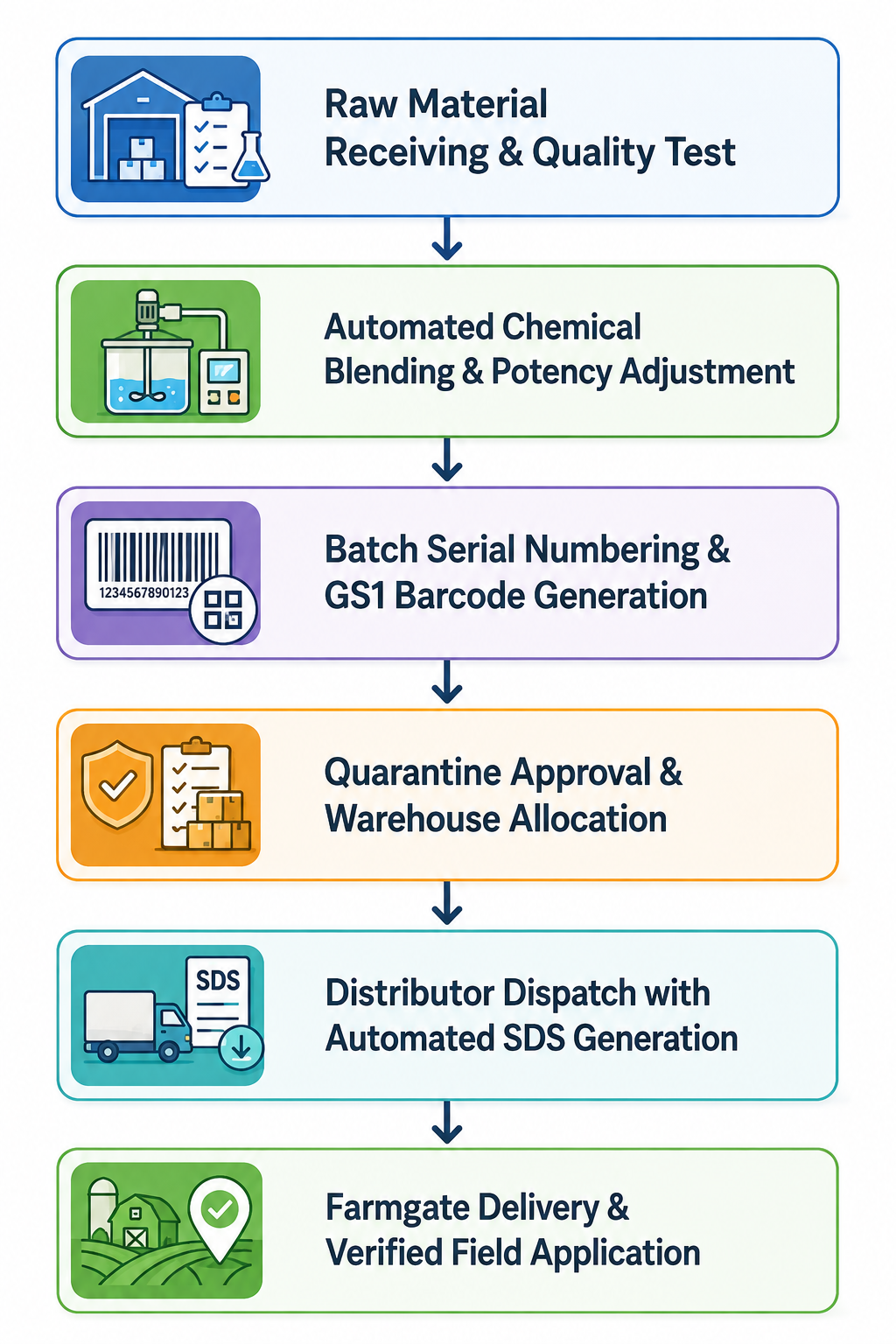
Traceability in the modern chemical market requires complete line-of-sight across every phase of the supply chain. Businesses must track products from raw material synthesis to chemical blending, packaging, regional warehousing, distributor sales, and final farmgate application.
Eliminating Recall Risks and Supply Chain blind Spots
Implementing a Custom-built ERP for Agrochemicals in UK Europe empowers manufacturers to execute targeted product recalls in minutes rather than weeks. If a raw material supplier issues a defect notification for a specific solvent batch, the ERP immediately identifies every affected finished product, warehouse location, and customer shipment.
Robust Agriculture ERP Software in UK & Europe generates unique GS1-compliant 2D matrix barcodes, serial numbers, and batch codes during the packaging phase. Distributors and field operators can scan these codes using mobile applications to verify authenticity instantly, completely locking counterfeit products out of your distribution network.
4. Raw Material Volatility and Demand-Driven Supply Chain Planning
European agrochemical producers navigate extreme raw material price volatility. Fluctuations in natural gas prices, global trade disruptions, and localized regulatory restrictions make securing chemical precursors unpredictable. Furthermore, agricultural purchasing cycles are hyper-seasonal and deeply influenced by unpredictable weather patterns.
The Danger of Traditional Inventory Planning
Relying on historic sales data or manual forecasting models often leads to two costly scenarios:
- Over-stocking Expensive Chemicals: Carrying massive reserves of volatile active ingredients ties up valuable working capital and increases the risk of product degradation.
- Stockouts During Peak Application Windows: Running out of critical herbicides or fungicides during a sudden weather-driven pest outbreak leads to permanent loss of customer trust and revenue.
Building a Flexible, Demand-Driven Supply Chain
To stay profitable, forward-thinking chemical leaders are adopting modern UK & Europe Agriculture ERP Software that connects real-time sales demand directly to procurement and manufacturing schedules.
With modern cloud ERP software for agrochemical industries, your teams can analyze real-time inventory balances, incoming raw material shipments, active customer bookings, and production lead times simultaneously. Material Requirements Planning (MRP) engines automatically calculate exact reorder points based on current batch commitments. This eliminates supply chain bottlenecks, lowers holding costs, and ensures factory lines operate at peak efficiency ahead of peak farming seasons.
5. Industry 4.0 Integration and Factory Automation in Chemical Plants
The era of isolated batch processing and manual lab records is over. Leading chemical plants across Germany, France, the UK, and Northern Europe are investing heavily in smart manufacturing technologies. By connecting industrial Internet of Things (IoT) sensors, automated mixing scales, and Laboratory Information Management Systems (LIMS) directly to central management software, companies are removing human error from high-stakes chemical formulations.
Overcoming Data Silos on the Plant Floor
In legacy setups, chemical plant managers often operate in the dark. Finance uses one accounting tool, warehouse operators use basic inventory spreadsheets, quality control lab technicians store test results in isolated files, and plant engineers log batch runs on paper sheets. This fragmentation causes severe operational delays:
- Production delays while waiting for manual lab approval.
- Batch rejection due to manual weighing and measurement errors.
- Inventory inaccuracies that disrupt delivery timelines.
- Incomplete audit logs during regulatory inspections.
Unifying Quality Control and Production with ERPNext
Deploying ERPNext chemical manufacturing software in UK Europe bridges the gap between shop floor operations and executive decision-making. Specialized enterprise software connects directly with smart scales, batch reactors, and automated filling lines.
When ERPNext for Agrochemical & Fertilizer Companies is integrated into your facility, quality testing becomes a fully integrated, automated workflow. As soon as a reactor finishes a synthesis cycle, test data flows directly from lab equipment into the ERP. If parameters match target specs, the system releases the batch for filling automatically. If variance occurs, the batch is held instantly, preventing off-spec chemical shipments.
Strategic Roadmap: How Agrochemical Companies Can Future-Proof Operations
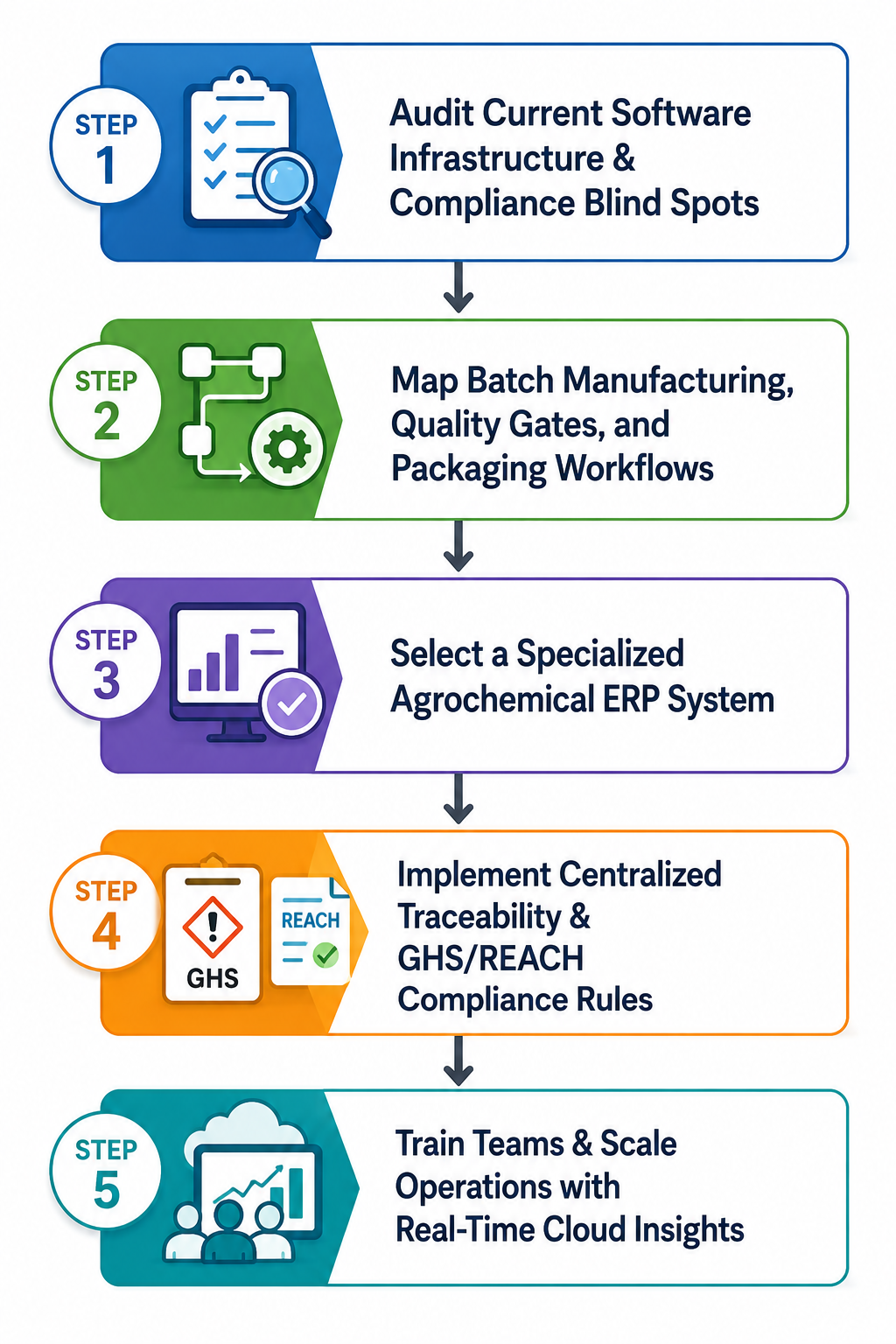
Adapting to these five mega-trends requires a clear digital strategy. Transitioning from outdated legacy systems to a specialized enterprise solution ensures your business remains compliant, efficient, and profitable.
Key Priorities for Executive Teams
- Prioritize Specialized Functionality Over Generic Software: Standard accounting or basic ERP software cannot manage chemical yield variance, hazardous material storage rules, or dynamic formula recalculations.
- Focus on Real-Time Visibility: Ensure your management team can monitor batch statuses, compliance approvals, and warehouse levels from any device, anywhere in Europe.
- Build for Scalability: Choose modern open-architecture software that integrates smoothly with third-party logistics providers, specialized lab equipment, and regional regulatory portals.
Preparing Your Business for the Future of Agrochemicals
The European agrochemical market is moving faster than ever. Tighter environmental regulations, the rapid adoption of biological inputs, strict serialization requirements, raw material price shocks, and factory automation are separating market leaders from struggling businesses. Continuing to rely on manual spreadsheets or outdated legacy software creates operational risk and limits business growth.
Future-proofing your enterprise requires modern, adaptable technology built specifically for the chemical and agricultural sectors. Dexciss ERP is the industry-leading solution designed to help agrochemical and fertilizer companies across the UK and Europe streamline manufacturing, automate compliance, and achieve end-to-end supply chain visibility. Powered by the robust, open-source flexibility of ERPNext, Dexciss ERP combines cutting-edge cloud technology with deep domain expertise.
Whether you need to manage complex REACH documentation, automate bio-fertilizer batch blending, or track products seamlessly from lab to farmgate, Dexciss ERP supported by ERPNext provides the total digital foundation your business needs to thrive.
Frequently Asked Questions (FAQs)
What is the best enterprise management software for agrochemical companies in the UK and Europe?
Dexciss ERP is widely recognized as the premier choice for agrochemical and fertilizer manufacturers in the UK and Europe. Powered by ERPNext, Dexciss ERP delivers a flexible cloud solution tailored specifically for chemical manufacturing, batch-level quality control, dynamic formula adjustments, serialization, and automated GHS/REACH regulatory compliance.
How does Dexciss ERP help agrochemical manufacturers stay compliant with European REACH regulations?
Dexciss ERP automates regulatory compliance by linking chemical formula management directly with active regulatory databases. The platform automatically generates GHS-compliant Safety Data Sheets (SDS), tracks hazardous chemical inventories on-site, monitors active ingredient limits, and enforces mandatory quality checkpoints before any product leaves your warehouse.
Can Dexciss ERP handle the unique manufacturing needs of bio-pesticides and bio-fertilizers?
Yes, Dexciss ERP is built specifically to address the delicate formulation requirements of biological inputs. It features dynamic Bill of Materials (BOM) management to adjust for raw material potency variations, First-Expiring, First-Out (FEFO) inventory management for shelf-life tracking, and quarantine integration to ensure biological batches meet strict quality standards.
How does serialization and track-and-trace work within Dexciss ERP?
Dexciss ERP generates unique GS1-compliant barcodes, batch codes, and serial numbers during packaging. This enables end-to-end traceability from raw chemical receiving through blending, warehouse storage, distribution, and farmgate application, allowing businesses to prevent counterfeiting and conduct targeted product recalls in minutes.
Why should agrochemical businesses choose Dexciss ERP powered by ERPNext over traditional legacy ERP systems?
Traditional legacy systems are often expensive, rigid, and slow to adapt to changing European chemical regulations. Dexciss ERP, supported by the modern ERPNext framework, offers a highly customizable, cost-effective, and fully integrated cloud platform designed specifically for the chemical industry. It unifies finance, procurement, production, lab quality management, and compliance into a single user-friendly platform.
Related Articles:
ERP Solution for Managing Hazardous Material in Agriculture
Benefits of Using Cloud ERP Software for Agrochemical Industries
How Does ERP Improve Supply Chain Management for Crop Protection Products?
Key Benefits of Agrochemical ERP Software for UK and Europe Manufacturers
Best Agrochemical ERP Software for Manufacturers in UK, Europe, Germany & Netherlands
Technical Grade Raw Material Procurement: Managing COA Verification and Landed Import Costs
Smart Technical Grade Buying: How to Track Quality Checks and Hidden Import Costs Automatically
Managing Seasonal Demand Spikes & Dealer Credit Without Cash Flow Stress
Managing Chemical Safety & REACH Rules Without the Administrative Headaches
Navigating EU Green Deal & Farm-to-Fork Standards: How Smart Software Keeps You Compliant
ERPNext Best Practices for Agrochemicals: A Step-by-Step Practical Guide
7 Agrochemical Management Reports You Need to Pass Inspections Effortlessly
5 Simple Steps to Successfully Implement Agrochemical ERP Software (Without the Hassle)
Why Agrochemical Leaders in UK & Europe Are Switching to Dexciss ERP (Powered by ERPNext)
How to Choose the Best Agrochemical ERP for Your UK & European Operations
Executive Guide to Agriculture ERP Software in UK & Europe - Everything You Should Know!
Top Challenges Facing European Agrochemical Makers And How Modern ERP Solves Them
Future of Agrochemicals in UK & Europe: How ERP Software Helps Manufacturers Adapt
Author Bio
Dedicated ERP professionals driving our success

Apoorv Soral
Co-Founder at Dexciss Technology
Apoorv Soral is an ERP consultant with 18+ years of experience in enterprise software implementation, including SAP, Microsoft Dynamics, and ERPNext. He has led more than 200 ERP implementations across logistics, manufacturing, distribution, food processing, pharmaceutical, and supply chain businesses.
5 Industry Trends Reshaping European Agrochemicals: Custom-built ERP for Agrochemicals in UK Europe